Essential Safety Standards for Playground Shade Structures

Playground shade structures are integral to safe, year-round outdoor play because they reduce UV exposure, lower surface temperatures, and influence surfacing and clearance requirements. This guide explains the regulatory framework—focusing on CPSC guidance, ASTM standards, local permitting in Charlotte, NC and Charleston, SC, surfacing criteria, structural and accessibility requirements, and the health benefits of UV protection—so designers and facility owners can build compliant shaded play areas. Readers will learn how CPSC recommendations map to permanent shade installations, which ASTM standards govern equipment and surfacing selection, how local building departments typically review shade structures, and which surfacing materials meet impact-attenuation tests and ADA expectations. The article follows a stepwise approach: summarize key national guidance, compare ASTM standards with a clear EAV table, walk through city permitting checklists, present surfacing comparisons and installation considerations, discuss engineering and ADA intersections, and explain the role of shade in reducing heat- and sun-related hazards. Throughout, semantic relationships between entities (for example, ASTM F1292 → defines → critical fall height) guide practical decisions for safe, code-compliant playground shade projects.

What Are the Key CPSC Playground Safety Guidelines for Shade Structures?
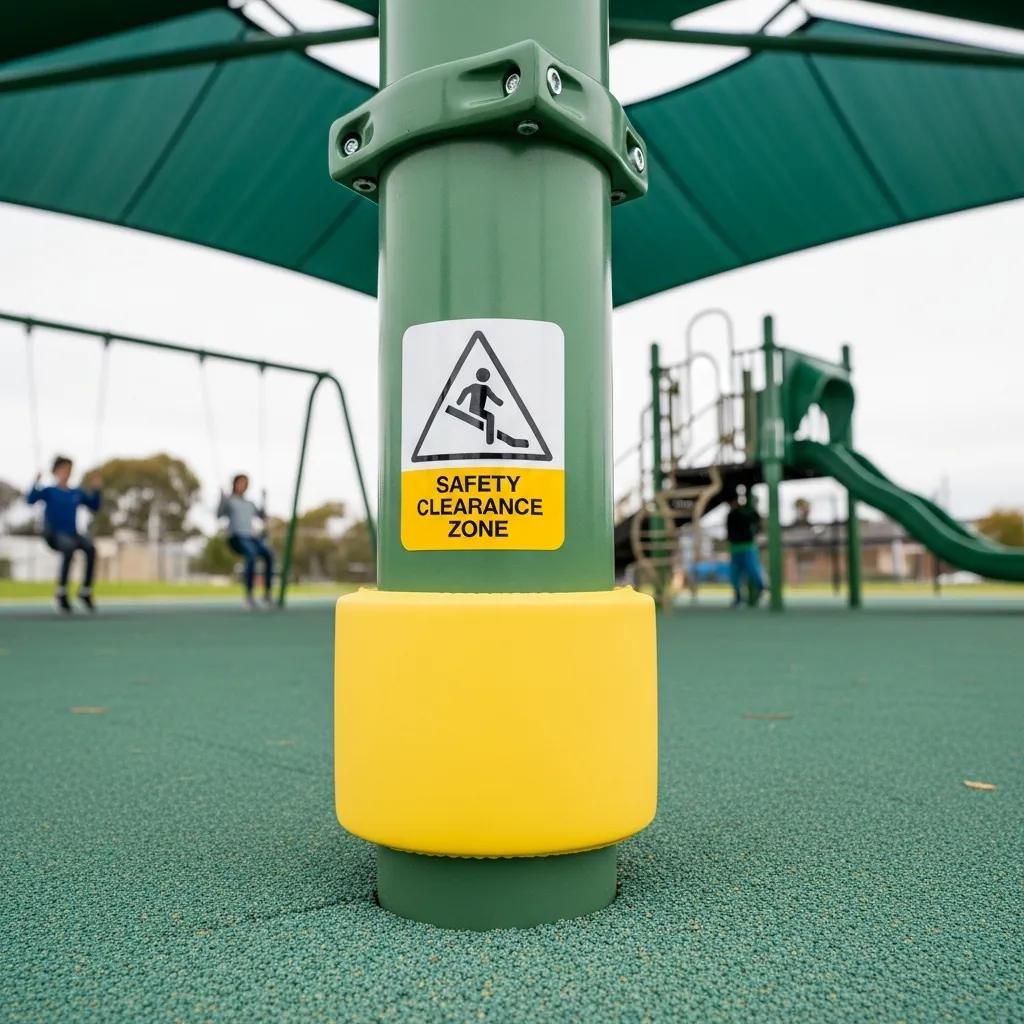
Close-up of a playground shade structure post with a "Safety Clearance Zone" warning sign, highlighting safety features and compliance with CPSC guidelines, surrounded by play equipment and rubber surfacing.

The U.S. Consumer Product Safety Commission (CPSC) handbook provides guidance that applies to shade structures by addressing use zones, clearance, surfacing beneath structures, and entrapment prevention. These recommendations exist because shade structures change typical equipment clearances and can introduce overhead and entanglement hazards, so designers must treat them as part of the play environment and not merely as accessory features. Following CPSC guidance reduces injury risk and clarifies how shade placement interacts with fall zones and critical fall heights. The following bulleted list highlights the top CPSC considerations for shade structures in playgrounds and serves as a practical checklist for project planning.

  • Ensure use zones under and adjacent to shade structures maintain the same protective surfacing requirements as play equipment.
  • Maintain overhead clearances sufficient to prevent head and entrapment hazards where children climb or reach.
  • Avoid protrusions and entanglement hazards on support columns and anchorage hardware through rounded edges and guarded fasteners.
  • Document inspection schedules and surfacing maintenance to preserve impact attenuation performance over time.

These recommendations connect directly to design choices: surfacing selection, shade fabric placement, and anchorage detailing. Understanding these points leads to specific clearance measurements and surfacing requirements for permanent installations.

How Do CPSC Guidelines Address Shade Structure Clearance and Safety?

CPSC guidance treats shade structures as components that can alter established use zones and fall surfaces, so clearance and spatial relationships are critical for safety. Designers should measure vertical clearance from the highest point children can stand or climb to the shade membrane and maintain lateral distances that prevent collisions with support columns; this prevents head impact and entrapment scenarios. For example, a shade canopy over a play area must not reduce the prescribed protective surfacing beneath the highest accessible surface, because critical fall height calculations depend on the maximum equipment height. Engineers and inspectors therefore verify that shade fabric, support columns, and anchorage hardware do not present protrusions within reach ranges, which would violate entrapment and impalement guidance. Properly documenting these clearances in drawings and inspection reports helps streamline permitting and ongoing safety audits.

What Are Common Playground Hazards and How Does Shade Structure Design Mitigate Them?

Common hazards include falls onto inadequate surfacing, entrapment around structural members, overheating of equipment surfaces, and UV-related skin damage during peak sun exposure. Thoughtful shade design reduces these risks by directing shade over high-use zones, selecting non-entangling support details, and integrating surfacing that maintains ASTM-certified impact attenuation under shaded conditions. For instance, placing shade canopies to reduce direct sun on metal slides yields lower surface temperatures and less risk of burns, while anchoring columns outside primary run and fall zones reduces collision risk. Additionally, using continuous fabric with appropriate tension prevents sagging pockets that could create climbable hazards. These mitigation strategies naturally lead to standards-based surfacing and structural engineering reviews to validate compliance.

Which ASTM Standards Govern Playground Equipment and Safety Surfacing?
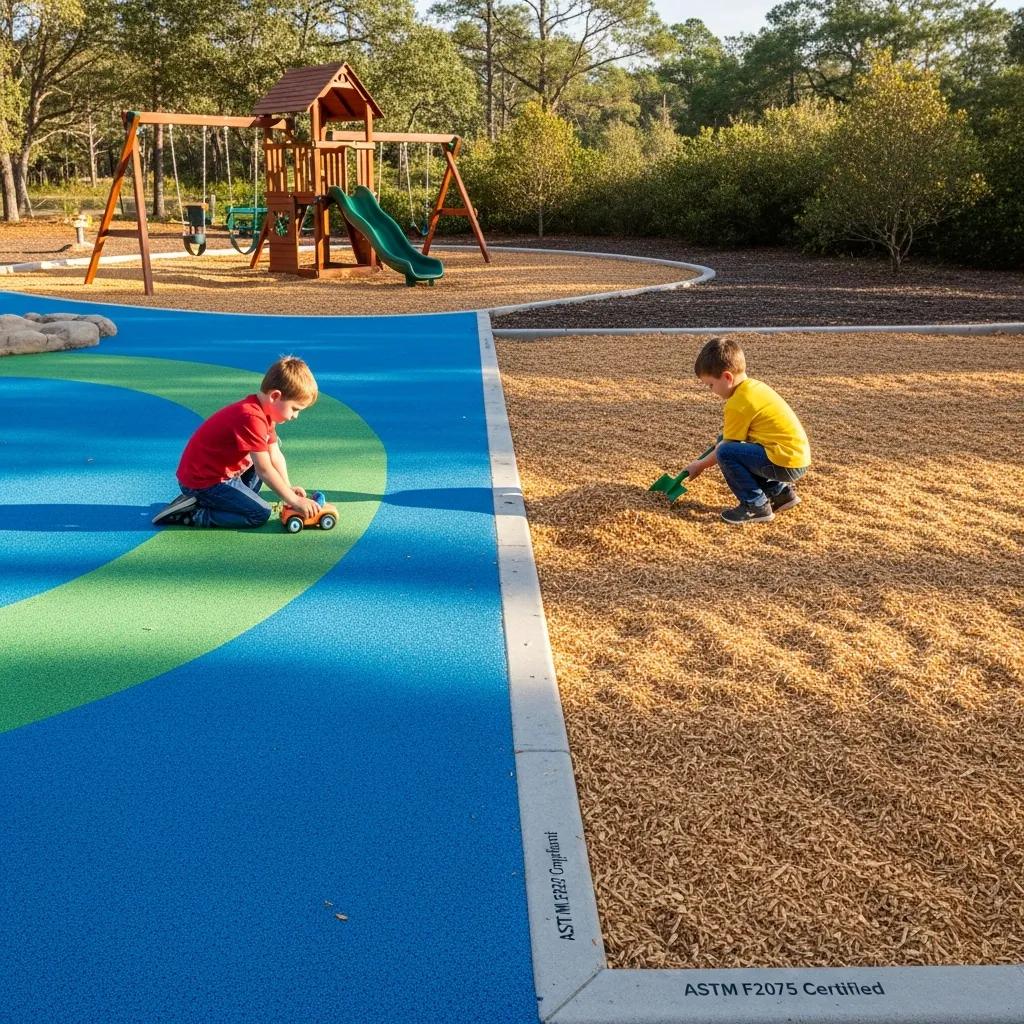
Children playing on safe playground surfacing, one using a toy car on colorful rubberized material and the other digging in engineered wood fiber, highlighting ASTM F2075 certified safety standards for playgrounds.

ASTM International provides the primary test methods and performance specifications for playground equipment and surfacing, with each standard addressing discrete safety attributes that inform equipment selection and installation. ASTM F1487 covers consumer safety performance specifications for equipment intended for public playgrounds, outlining requirements for entrapment, protrusions, and use zones. ASTM F1292 establishes testing protocols for impact attenuation and critical fall height, which directly determines required surfacing depth for a given material. ASTM F2075 covers specifications for engineered wood fiber (installation and testing), and ASTM F3012 addresses performance requirements for poured-in-place (PIP) surfacing systems. The table below compares key ASTM standards, what they cover, and when each applies to a shade-plus-play environment.

This comparison clarifies which standards to reference during specification and submittal review.

StandardScopeWhen It Applies
ASTM F1487Equipment safety: entrapment, protrusions, spacing, use zonesUse for selecting and evaluating play equipment and associated structural elements
ASTM F1292Impact attenuation testing and critical fall height determinationUse to verify surfacing meets attenuation for the highest fall height present
ASTM F2075Specifications for engineered wood fiber (installation and testing)Use when specifying loose-fill surfacing like EWF and defining maintenance regimes
ASTM F3012Performance requirements for poured-in-place surfacing systemsUse when specifying and verifying PIP rubber surfacing systems

What Are the Requirements of ASTM F1487 for Playground Equipment?

ASTM F1487 sets out performance criteria intended to reduce entrapment, sharp edges, and head and neck hazards through dimensional limits, protective covers, and surfacing requirements. The standard prescribes maximum opening sizes to avoid limb entrapment, limits on exposed hardware and protrusions, and guidance on accessible surfacing within the use zone. By ensuring equipment spacing and barrier placement meet F1487 thresholds, designers minimize pinch, shear, and entrapment risks for children across age groups. Project documentation should reference F1487 compliance and include equipment submittals and manufacturer test certificates to demonstrate conformance during permit and inspection reviews.

How Does ASTM F1292 Define Safety Surfacing Impact Attenuation?

ASTM F1292 defines an instrumented pendulum or headform test protocol to determine impact attenuation and calculate critical fall height (CFH) for a given surfacing material. CFH is the maximum height from which a fall is considered adequately attenuated by the surfacing; designers use CFH to specify minimum material depths, such as poured-in-place rubber or engineered wood fiber. Interpreting F1292 test data means matching the CFH value to the highest accessible surface on site and then choosing a surfacing system and depth that maintains that CFH through expected compaction and wear. Including manufacturer F1292 test reports in specifications provides objective verification for permit reviewers and owners.

How Do Local Building Codes and Permitting Processes Affect Playground Shade Structures in Charlotte, NC and Charleston, SC?

Local building departments determine whether a shade structure is classified as a temporary shelter, a permanent canopy, or an accessory structure, and that classification dictates the permit type, submittal requirements, and structural review level. Charlotte and Charleston share the need for site plans, engineered drawings, and evidence of compliance with local wind-load and foundation requirements, but they differ in coastal considerations and historical or zoning overlays. Practically, permit reviewers examine engineered footings, wind-load calculations, anchor details, and surfacing continuity with the play area to ensure public safety and code compliance. Below is a concise, numbered permit checklist that targets common city expectations and expedites permit review.

  1. Prepare a site plan showing shade location relative to play equipment, property lines, and utilities.
  2. Submit engineered structural drawings with site-specific wind-load calculations and footing details.
  3. Include surfacing specifications and ASTM test reports demonstrating required impact attenuation.
  4. Provide a maintenance and inspection plan addressing surfacing depth retention and fabric replacement.
  5. Complete any zoning or historic overlay reviews required by municipal planning departments.

These steps reflect typical municipal review paths; anticipating them reduces revision cycles and approval time. The following table clarifies common permit items, responsible parties, and notes specific to local practice.

Permit ItemRequired Document / Responsible PartyNotes / Examples
Site PlanScaled plan showing equipment, shade, setbacks / Designer or landscape architectShows location relative to property and utilities
Structural DrawingsEngineered plans and calculations / Licensed structural engineerIncludes wind-load and anchorage details for permitting
Surfacing DataManufacturer F1292 reports and depth specifications / Specifier or installerDemonstrates attenuation under shade and equipment
Inspection ScheduleMaintenance and inspection plan / Owner or maintenance contractorRequired by some jurisdictions to demonstrate ongoing compliance

This table helps teams assign responsibilities and prepare a complete submittal to prevent common permit delays. Building on permit readiness, project teams can also leverage local expertise to streamline reviews; Shade and Play Pros provides localized permitting assistance in Charlotte, NC and Charleston, SC. Their services include preparing site plans, coordinating engineered drawings, and compiling permit documentation to reduce regulatory friction and shorten approval timelines. Facilities seeking help often benefit from a permit checklist and documentation package that aligns engineered details with municipal expectations.

What Are the Permit Requirements for Playground Shade Structures in Charlotte, NC?

Charlotte typically requires a clear site plan, structural calculations demonstrating compliance with local wind-load provisions, and footing/anchorage details for any permanent shade canopy, with additional attention to utility coordination and stormwater considerations. Permit reviewers expect engineered drawings sealed by a licensed engineer and may request foundation details that account for local soil conditions and frost lines where applicable. Early coordination with the city’s permitting office often uncovers zoning overlays or required setbacks that influence shade placement, and pre-submittal reviews can save time during formal permitting. Including surfacing continuity and inspection protocols in the submittal clarifies how the shade affects protective surfacing requirements and accelerates approval.

How Do Charleston, SC Local Codes Influence Shade Structure Compliance?

Charleston’s coastal environment emphasizes wind-load design and corrosion-resistant materials, so engineers must provide site-specific wind-load calculations and specify materials and coatings resilient to salt-air exposure. Zoning overlays or historic district reviews may also apply, requiring additional design narrative and aesthetic approvals that influence canopy form and column finishes. Permit submissions to Charleston should document anchorage systems sized for coastal wind demands and show how surfacing and accessible routes remain intact under the canopy. Addressing these coastal and aesthetic factors early helps align designs with local code interpretations and reduces resubmittals during the approval process.

What Are the Essential Playground Safety Surfacing Requirements for Compliance?

Selecting surfacing requires matching impact-attenuation performance to the critical fall height of the playground components and ensuring ADA-compliant firm and stable access where required. ASTM F1292 test data, manufacturer installation guidance, and maintenance regimes define long-term compliance: materials must meet F1292 attenuation at installation and maintain that performance through measurable inspection intervals. The table below compares common surfacing options by critical fall height capability, maintenance notes, and typical installed depth to help decision-making for shaded play areas where lower temperatures and moisture retention may affect longevity.

Surfacing MaterialCritical Fall Height CapabilityMaintenance NotesTypical Installed Depth
Engineered Wood Fiber (EWF)Moderate CFH (varies with depth/compaction)Requires frequent raking and topping to maintain depth6–12 inches depending on CFH
Poured-in-Place (PIP) RubberHigh CFH with stable performanceLow maintenance; occasional surface cleaning and seam repair1.5–4 inches (with base)
Rubber MulchModerate to high CFH; variablePeriodic replenishment to maintain depth; can migrate6–12 inches depending on CFH
  • Engineered Wood Fiber: cost-effective and permeable but needs frequent maintenance to preserve CFH.
  • Poured-in-Place Rubber: delivers consistent attenuation and ADA accessibility but has higher upfront cost.
  • Rubber Mulch: offers good attenuation and drainage but requires containment strategies to prevent migration.

After reviewing options, teams should prioritize systems that retain attenuation under shade and tidal moisture cycles. The following bulleted list summarizes surfacing pros and cons to guide material selection.

Which Safety Surfacing Materials Meet ASTM Standards?

Materials that commonly meet ASTM F1292 include poured-in-place rubber, engineered wood fiber when properly installed and maintained, and tested manufactured rubber tiles or bonded systems. Each material has trade-offs: EWF is inexpensive and drains well but compacts and requires replenishment; PIP rubber provides consistent impact attenuation and ADA-compliant firm surfaces but costs more and requires proper base preparation; rubber mulch can provide good attenuation but often needs containment edges and replenishment. Selecting materials requires reviewing manufacturer F1292 test reports, confirming installation tolerances, and planning inspection intervals to preserve CFH performance over time. Ultimately, matching the highest accessible surface to a tested surfacing system and depth is the compliance pathway.

How Does Critical Fall Height Determine Surfacing Depth and Material Choice?

Critical fall height (CFH) is the metric derived from impact attenuation testing that indicates the maximum fall height a surfacing system can safely protect; designers convert CFH into required material depth using manufacturer tables and F1292 data. For example, if the highest accessible point on an accessible climber is 6 feet, the surfacing must demonstrate a CFH ≥ 6 feet for the installed depth and material; for EWF that may mean 9–12 inches of loose fiber, while PIP rubber may achieve the same CFH at 2–3 inches depending on system specifications. The calculation process includes verifying as-installed depth, compaction allowances, and expected wear, then documenting maintenance schedules to ensure continued compliance. Including these calculations in permit submittals and maintenance plans demonstrates an evidence-based approach to long-term safety.

How Can Commercial Shade Structures Ensure Compliance with Safety and Accessibility Standards?

Commercial shade structures must combine structural engineering for wind and anchorage with surfacing continuity and ADA-compliant circulation to meet safety and accessibility standards. Structural drawings should include site-specific wind-load calculations, connection details, and foundation sizing; these items are essential for permit approval and for preventing catastrophic failure in high winds. Accessibility considerations require that routes under and around shade structures remain firm, stable, and slip-resistant, with seating and transfer points designed to support inclusive play. The following checklist highlights core compliance tasks for commercial shade projects and guides coordination among designers, engineers, and installers.

  1. Verify site-specific wind loads and include engineered connections and foundation details in drawings.
  2. Ensure anchorage hardware and footings do not intrude into protective use zones or create trip hazards.
  3. Maintain ADA-compliant routes and surfaces beneath and adjacent to the shade, including ramps and turning spaces.
  4. Provide manufacturer installation certificates and F1292 reports for surfacing systems where applicable.

After technical review, specialty providers can coordinate engineering, structural review, and ADA-focused detailing. Shade and Play Pros provides structural design coordination, wind-load engineering liaison services, and ADA-focused layout assistance, and they can link project teams to case studies demonstrating compliant approaches to commercial shade canopies in the target markets. These services help bridge the gap between technical requirements and practical installation so projects meet both safety and accessibility objectives.

What Are the Wind Load and Structural Integrity Requirements for Commercial Shade Structures?

Wind-load requirements are site-specific and typically require a licensed engineer to calculate design pressures, specify tensioning and connection components, and size footings to resist uplift and overturning. Engineers will verify membrane stresses, column buckling checks, and anchorage capacity and will include inspection criteria to document periodic safety checks. Documentation for permits generally includes load calculations, connection details, and material specifications indicating corrosion resistance where conditions demand it. Early engagement with structural engineers ensures that the shade design integrates with playground surfacing and use-zone boundaries to avoid creating new hazards.

How Does ADA Accessibility Impact Playground Shade Structure Design?

ADA accessibility affects shade structure layout by requiring firm, stable routes to and under shaded seating and play elements, adequate clearances for wheelchair maneuverability, and accessible surfacing transitions where surfacing types meet or change. Designers must ensure that surfacing under shade permits travel by mobility devices and that transfer points or inclusive play elements remain within shaded zones to support equitable use. Signage, seating heights, and spacing should accommodate diverse users while preserving the required use zones and surfacing depths. Integrating accessibility early in design prevents costly revisions and aligns shade placement with inclusive play goals.

Why Is UV Protection Important and How Do Shade Structures Enhance Playground Safety?

UV protection through shade structures reduces acute and long-term health risks, lowers surface temperatures on equipment, and extends safe outdoor playtime for children and caregivers. By blocking a significant portion of direct solar radiation, shade membranes reduce skin exposure and the risk of heat-related illnesses during peak sun hours, supporting public-health objectives in outdoor recreational spaces. Shade also moderates surface temperatures for plastics and metals, decreasing burn hazards and equipment degradation, which in turn reduces maintenance needs and improves longevity. These health and operational benefits make shade an important safety and asset-preservation strategy for playgrounds.

What Are the Health Benefits of UV Protection in Playground Shade Design?

Providing UV protection in play areas lowers cumulative sun exposure for children, which is associated with reduced lifetime skin-cancer risk and immediate reductions in sunburn incidence. Shaded areas also support longer comfortable play periods by decreasing thermal stress, allowing children to remain hydrated and supervised without excessive heat exposure. From a public-health perspective, incorporating shade contributes to preventive strategies for sun safety and encourages outdoor activity with lower acute risk. Designers should consider fabric UV-blocking ratings, orientation to sun paths, and integration with vegetation to maximize protection across play schedules.

How Do Shade Structures Contribute to Safer Outdoor Play Environments?

Shade structures contribute to safety by limiting equipment surface overheating, improving adult supervision through defined shaded gathering areas, and prolonging the useful life of surfacing and play components by reducing UV degradation. Properly designed shade placements yield cooler microclimates that decrease the likelihood of heat-related incidents and reduce rapid thermal expansion that can stress materials. Regular inspection and maintenance of shade membranes and hardware prevent sagging or torn fabric that could create new hazards while scheduled cleaning preserves UV performance. These operational practices, combined with standards-aligned design, make shade structures a foundational element of safer, more resilient playgrounds.