Choosing the Right Surfacing for Dog Parks: Expert Guide to Safe, Durable, and Low-Maintenance Solutions

Dog park surfacing refers to the materials and layered systems that create the play, rest, and circulation areas within a dog park, and choosing the right surfacing balances safety, durability, drainage, and upkeep for municipal or community use. This guide explains how surfacing decisions affect injury risk, odor control, long-term cost, and user satisfaction, with practical comparisons among artificial turf, gravel (pea gravel and decomposed granite), rubber mulch, and hybrid approaches. Readers will learn which materials perform best for different dog sizes and traffic levels, how drainage and design elements prevent mud and odor, and how maintenance schedules and antimicrobial options optimize hygiene. The article maps essential design elements such as subsurface drainage, shade structures, fencing, and waste stations and presents cost and ROI considerations tailored for municipalities, HOAs, and commercial properties in Charlotte and Charleston. Throughout, target keywords like dog park surfacing, artificial turf, drainage, pea gravel dog park, decomposed granite dog park, rubber mulch dog park, and antimicrobial infill are woven into actionable guidance to support decision-making and project planning.

Choosing Dog Park Surfacing: Safe, Durable & Low-Maintenance Options

Selecting dog park surfacing requires assessing use patterns, dog demographics, climate, budget, and maintenance capacity; these factors determine which materials meet safety and longevity goals. A well-chosen surface reduces injuries, controls odor, and minimizes life-cycle costs by matching material properties—such as permeability and cushioning—to expected traffic and weather. Considerations should be prioritized so stakeholders can make tradeoffs between upfront cost and ongoing maintenance, and so accessibility and aesthetic goals align with community expectations. Below is a concise decision checklist to help teams evaluate surfacing options before diving into material comparisons and installation planning.

  1. Dog demographics: small vs. large breeds and digging or chewing behaviors.
  2. Expected daily and peak traffic levels and dedicated activity zones.
  3. Local climate and rainfall patterns that impact drainage needs.
  4. Budget constraints including upfront installation and long-term maintenance.
  5. Accessibility, aesthetics, and community acceptance for public spaces.

This checklist clarifies the priority tradeoffs and leads into a more detailed look at how dog size, traffic, and climate specifically influence material suitability and maintenance demands.

How Do Dog Size, Traffic Volume, and Climate Influence Surfacing Choice?
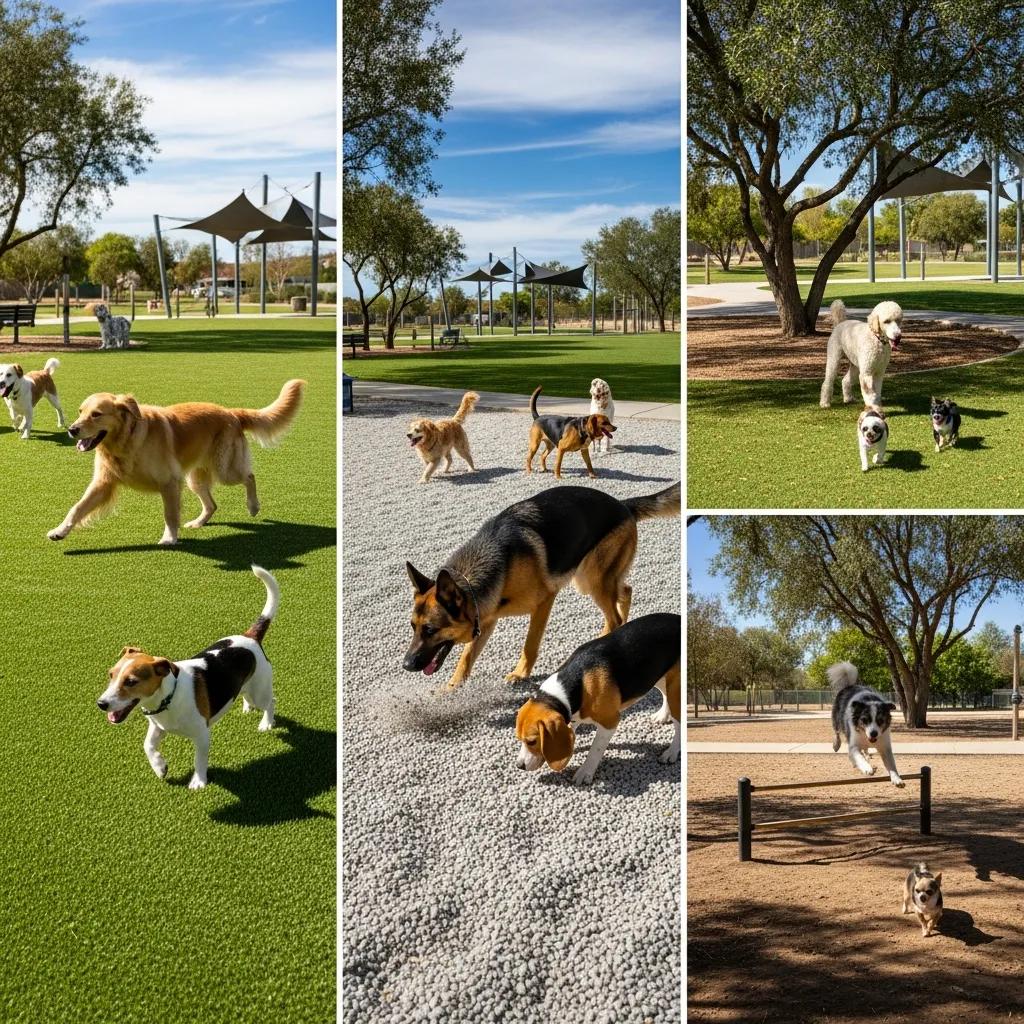
Dogs of various breeds playing on synthetic grass and gravel surfaces in a sunny dog park, highlighting the influence of size and climate on surfacing choices.

Dog size, traffic volume, and local climate are primary determinants for surfacing suitability because they directly affect cushioning needs, wear patterns, and drainage performance. Large, high-energy dogs create more compaction and require surfaces with durable backing and resilient infill or cushioning, whereas areas for small or senior dogs benefit from softer surfaces that protect paws and joints. High-traffic parks need materials with proven wear resistance—such as commercial-grade artificial turf with proper subsurface drainage—or easily replenished gravels in lower-budget scenarios. Climate influences material choice through heat retention (rubber and some synthetic turf infills), freeze-thaw durability, and rainfall-driven drainage requirements, so designers should match permeable base layers and surface types to local conditions to prevent mud and standing water.

These demographic and environmental considerations naturally lead to evaluating how budget and aesthetic goals affect the final material selection and overall project scope.

What Budget and Aesthetic Goals Should Guide Material Selection?

Budget and aesthetic goals define acceptable tradeoffs between immediate cost and long-term value, and they influence whether communities choose natural-looking solutions or engineered systems. Upfront cost buckets commonly fall into low (gravel, decomposed granite), medium (rubber mulch, mid-grade turf systems), and high (commercial synthetic turf with antimicrobial infill and engineered subsurface drainage), with lifecycle maintenance altering true cost over time. Aesthetic goals—such as a natural appearance that blends with park landscaping versus a clean, green synthetic look—affect material choice and public buy-in, especially for parks managed by HOAs or municipalities. Finally, accessibility standards and ADA considerations should be integrated early so surfacing selections support mobility for people and dogs alike and meet community expectations for usability and appearance.

Understanding cost tradeoffs and visual priorities leads naturally to comparing each material’s durability, safety, maintenance needs, and drain performance in detail.

Which Dog Park Surfacing Materials Offer the Best Durability and Safety?

Choosing the right material requires comparing durability, safety, drainage, maintenance, and cost across artificial turf, pea gravel, decomposed granite, rubber mulch, and natural grass; this comparison helps match materials to intended use zones. Each material has clear pros and cons: synthetic turf offers predictable footing and easy cleaning with proper drainage, gravel types excel for permeability but need edging, and rubber mulch provides cushioning but has heat and ingestion considerations. Below is a concise comparison table that helps stakeholders quickly assess material attributes before reviewing maintenance practices and suitability by use-case.

MaterialDurabilityMaintenanceDrainageTypical Cost
Artificial turf (commercial)High; engineered backing resists wearRegular debris removal, infill top-ups, sanitizingExcellent with permeable baseMedium–High
Pea gravelMedium; resists erosion but migratesRaking, replenishment, edgingVery good; highly permeableLow–Medium
Decomposed graniteMedium; compacts over timeRegrading, dust control, edgingGood when stabilizedLow–Medium
Rubber mulchMedium-High durability, cushions fallsPeriodic topping up, inspectionPermeable but can trap odor if base not drainedMedium
Natural grassLow under heavy traffic; erodesMowing, reseeding, irrigationPoor in high-use areasLow upfront, high upkeep

This comparison shows how engineered surfaces prioritize predictable performance while granular materials trade lower upfront cost for more frequent maintenance and edge control. In the next subsections we examine artificial turf and gravel variants in greater depth, including hygiene, drainage, and local climate considerations.

What Are the Benefits and Maintenance Needs of Artificial Turf for Dog Parks?

Artificial turf for dog parks delivers high durability, consistent footing, and simplified sanitation when installed over an engineered permeable base, making it ideal for high-traffic or multi-use community parks. Properly installed turf systems incorporate a permeable base layer and infill—often antimicrobial infill options—to facilitate drainage and reduce odor and bacterial buildup, while the turf backing and stitching are chosen for tensile strength under heavy use. Routine maintenance includes daily debris and waste removal, weekly brushing to redistribute infill, and periodic sanitizing with approved enzymatic cleaners to control odors; inspections should check seam integrity and infill depth. Turf can retain heat in direct sun, so pairing turf with shade structures and hydration stations is important in warmer climates to maintain comfort and safety for dogs.

These benefits and maintenance requirements lead into how gravel and decomposed granite perform in contrast, especially where drainage and comfort are top priorities.

How Do Gravel and Decomposed Granite Compare in Drainage and Comfort?

Pea gravel and decomposed granite excel at drainage because granular particles allow water to percolate quickly through the surface into a permeable base, minimizing puddles and mud in wetter climates or high-rainfall events. Pea gravel provides good drainage and a forgiving surface for paws, but it can migrate and requires edge restraints and periodic replenishment; decomposed granite compacts into a firm surface that reduces migration but may become dusty and less comfortable on paws without stabilization. Maintenance for both includes raking, replenishing materials, controlling dust, and installing robust edging to keep the material contained and pedestrian-friendly. For parks prioritizing low upfront cost and excellent permeability, gravel and decomposed granite are practical choices, provided regular upkeep and edge management are factored into lifecycle planning.

These comparisons clarify where rubber mulch fits into design strategies focused on cushioning and injury reduction.

How Does Rubber Mulch Enhance Safety and Cushioning in Dog Parks?

Person holding a green bucket filled with rubber mulch, preparing to spread it on a ground surface for dog park safety and cushioning.

Rubber mulch enhances safety by providing long-lasting cushioning that reduces impact forces and lowers injury risk during playful activity, making it a good choice for agility zones, small-dog play areas, or sections with elevated obstacles. The material’s shock-absorbing properties help protect joints and reduce wear on bodies, and rubber mulch resists compaction and biodegradation compared with wood fiber, offering a longer lifespan under heavy traffic. Environmental considerations include recycled content and potential heat retention; designers frequently pair rubber mulch with shade and water features to mitigate temperature concerns. Overall, rubber mulch is best used strategically in zones where cushioning matters most and where maintenance teams can monitor ingestion and surface condition regularly.

What Are the Ingestion Risks and Durability Factors of Rubber Mulch?

Ingestion risk with rubber mulch is a concern for some dogs, especially chewers and puppies, so choosing appropriately sized granules and performing routine inspections reduces the likelihood of ingestion. Durability factors include UV stability and resistance to breakdown; premium rubber mulches are engineered to resist fading and fragmentation, but they still require periodic topping up as small pieces migrate or are displaced by heavy activity. Maintenance best practices include scheduled inspections, immediate removal of damaged pieces, and targeted replenishment in high-wear areas to maintain consistent cushioning depth. Implementing signage that discourages chewing and providing alternative chew toys or enrichment can further mitigate ingestion risk while preserving mulch integrity.

These risk mitigation tactics point toward climates and settings where rubber mulch offers the most practical performance benefits.

In Which Environments Is Rubber Mulch Most Suitable?

Rubber mulch performs best in temperate climates or shaded areas where heat retention is less problematic and in designated cushioning zones such as agility courses or senior-dog sections. It is less advisable in highly exposed, very hot climates without adequate shade because rubber can retain heat and create discomfort for paws; pairing mulch with shade structures and water stations helps offset this effect. Rubber mulch is an excellent fit for parks seeking medium-term durability with low biological breakdown, especially where recycled-material sustainability goals align with maintenance capabilities. For site plans that include mixed materials, rubber mulch can be combined with turf or gravel in activity-specific zones to optimize cushioning where it matters most.

These suitability guidelines segue into essential design elements that must be integrated to support any surfacing choice, particularly drainage and shade.

What Are Essential Dog Park Design Elements to Complement Surfacing Choices?

Essential dog park design elements—such as subsurface drainage, shade structures, secure fencing, and strategically located waste and water stations—work together with surface selection to create a durable, hygienic, and comfortable environment for dogs and owners. Subsurface drainage ensures that permeable surfaces function as intended and prevents odor-causing anaerobic conditions, while shade and water infrastructures reduce heat stress and surface degradation. Secure fencing and properly sized gated entries preserve safety and reduce edge damage by containing materials, and waste stations placed on natural walking routes promote responsible use and faster cleaning. Below is a structured table that maps these design elements to recommended attributes, typical cost ranges, and maintenance cadence to guide planning and budgeting.

Design ElementBenefitTypical Cost RangeMaintenance Frequency
Subsurface drainage (permeable base, French drains)Prevents mud and standing waterMedium–HighAnnual inspection, seasonal cleaning
Shade structures (canopies, trees)Reduces surface heat and user discomfortLow–MediumBiannual inspection, cleaning
Fencing and gated entrySecurity and containmentLow–MediumAnnual check, post-storm repairs
Waste and water stationsHygiene; reduces surface foulingLowDaily waste pickup, weekly restocking

Integrating these elements into surfacing plans ensures material performance and visitor comfort while reducing long-term maintenance burdens. After considering these design elements, the practical integration of such features into turnkey projects helps communities realize cohesive, low-maintenance parks.

Shade and Play Pros integrates subsurface drainage, shade, fencing, and waste infrastructure into turnkey dog park projects so that surfacing choices and amenities operate as a unified system. Their installation process emphasizes permeable base construction and placement of shade and waste stations to reduce surface stress and improve user hygiene. Municipal and community clients can request project consultations and portfolio reviews from Shade and Play Pros to see how these design elements were combined effectively in past local projects.

How Do Advanced Drainage Systems Prevent Mud and Odor Buildup?

Advanced drainage systems—such as engineered permeable bases, gravel layers with geotextile separators, and targeted French drains—move moisture away from the surface quickly and prevent anaerobic pockets that produce odors. These systems work with permeable surfacing materials to maintain aerobic conditions in the base layer and reduce bacterial proliferation, and they must be tied into predictable outfalls or infiltration zones to avoid creating downstream problems. Regular maintenance to remove debris from inlets and to flush or inspect subsurface components keeps flow paths open and prevents clogs and odor recurrence. Designing drainage with an eye toward easy access for cleaning and seasonal adjustment improves long-term performance and helps surfaces like turf or rubber mulch remain sanitary and functional.

This drainage-focused approach naturally ties into how shade, fencing, and waste stations complement surfacing to preserve longevity and user experience.

Why Are Shade Structures, Fencing, and Waste Stations Critical for Dog Parks?

Shade structures mitigate heat-related stress for both dogs and surfaces, reducing heat-induced degradation for materials like rubber mulch and synthetic infill, while providing comfort that encourages longer, safer play sessions. Secure fencing and gated entry points protect smaller dogs and control flow, minimizing material migration and concentrated wear at access points; appropriate fence height and double-gate entry reduce escapes and collisions. Waste stations positioned at logical traffic nodes encourage immediate removal of waste, dramatically reducing odor and pathogen load on any surface, and combined with water stations they support hydration and cooling. Together these amenities preserve surfacing condition, reduce maintenance cycles, and improve the overall perception and usability of the park for community stakeholders.

How Can Odor Control and Hygiene Be Optimized in Dog Park Surfacing?

Optimizing odor control and hygiene requires selecting compatible surfacing and infill materials, designing effective drainage, and implementing regular cleaning protocols that prevent bacterial and odor buildup. Antimicrobial infills and enzymatic cleaners address biological contaminants directly, while surface choice and subsurface permeability determine how easily urine and organic matter are flushed or biodegraded. Non-toxic materials and schedule-driven maintenance—daily waste pickup, weekly surface rinses, and monthly deep-clean cycles—minimize health risks and preserve surface performance. The following list outlines practical steps parks can adopt to keep surfaces sanitary and odor under control while balancing staff time and budget.

  • Daily: Remove solid waste and inspect high-use zones for hazards.
  • Weekly: Brush or rake surfaces, redistribute infill, and rinse areas prone to odor.
  • Monthly: Apply enzymatic or approved sanitizers to concentrated areas and check drainage inlets.
  • Annually: Deep clean base layers as needed and schedule professional inspections of turf seams or drainage lines.

Implementing these steps and matching them to material-specific practices keeps parks cleaner, safer, and more welcoming for users. The next subsections dive deeper into antimicrobial infills and non-toxic material verification to align selection with maintenance schedules.

What Role Do Antimicrobial Infills and Cleaning Protocols Play?

Antimicrobial infills inhibit microbial growth at the surface-infill interface, reducing odor production and improving perceived cleanliness when paired with an engineered subsurface drainage system. Cleaning protocols that combine daily waste removal, weekly brushing and rinsing, and monthly enzymatic treatments create multiple control points against bacterial proliferation and odor retention, and these routines should be documented in a maintenance plan. Selecting infill materials with antimicrobial properties and confirming compatibility with enzymatic cleaners ensures treatments do not degrade performance. A coordinated approach—material choice plus scheduled maintenance—maximizes hygiene outcomes and extends the useful life of surfacing systems.

This focus on product and procedure leads into verification of non-toxic materials and a practical maintenance calendar.

How Do Non-Toxic Materials and Maintenance Schedules Ensure Safety?

Choosing non-toxic surfacing materials and certified infills reduces chemical exposure risks for dogs and people, and checking vendor documentation for UV stability and leachate testing helps verify safety claims. Maintenance schedules that include frequent inspections, injury checks, and replenishment of infill or granular materials prevent hazardous conditions such as exposed seams, sharp edging, or compacted layers. A simple annual maintenance calendar that assigns daily, weekly, monthly, and yearly tasks clarifies responsibilities for caretakers and ensures consistent performance. Combining verified non-toxic materials with disciplined maintenance supports long-term safety and community confidence in the park infrastructure.

A robust hygiene program also influences long-term cost and ROI, which is the focus of the next section.

What Are the Cost Considerations and ROI for Different Dog Park Surfacing Options?

Cost considerations for dog park surfacing include upfront installation, expected lifespan, annual maintenance, and the total 5- to 10-year ownership cost, which together determine ROI for municipalities and HOAs. While granular materials often present lower initial costs, engineered systems like commercial turf with antimicrobial infill and subsurface drainage usually yield lower maintenance expense and higher uptime over time. The table below compares upfront cost, expected lifespan, annual maintenance cost, and a simple 10-year total cost estimate to help decision-makers evaluate tradeoffs quantitatively before finalizing a budget and funding plan.

Surfacing OptionUpfront Cost EstimateExpected LifespanAnnual Maintenance CostApprox. 10-Year Total Cost
Artificial turf (commercial)Medium–High10–15 yearsLow–MediumMedium–High
Pea gravelLow–Medium5–10 yearsMedium (replenish)Medium
Decomposed graniteLow–Medium5–10 yearsMedium (regrading)Medium
Rubber mulchMedium7–12 yearsLow–MediumMedium
Natural grassLow upfront2–5 years under heavy useHighHigh (due to frequent repair)

This table illustrates that higher upfront investments in engineered surfacing can produce lower total costs when factoring maintenance and downtime, which is especially important for parks aiming for consistent availability and low staff burden.

How Do Upfront Costs Compare to Long-Term Maintenance Savings?

Higher upfront investments—such as installing a professionally engineered artificial turf system with antimicrobial infill and a permeable base—often reduce annual maintenance needs and extend usable life, producing savings over a 5- to 10-year horizon compared with low-cost granular surfaces that require frequent replenishment. Scenarios where parks have limited maintenance staff or high daily traffic typically favor higher-quality systems because they minimize closure days and deliver consistent user satisfaction. Conversely, budget-constrained projects with low expected usage can realize value from gravel or decomposed granite while planning for periodic replenishment and edge management. Clear assumptions about traffic, maintenance capacity, and replacement cycles allow stakeholders to compute ROI and choose the cost profile that aligns with operational realities.

What Local Case Studies Demonstrate Effective Surfacing Solutions in Charlotte and Charleston?

Local case studies illustrate how surfacing choices, drainage design, and amenity integration deliver measurable outcomes such as reduced maintenance hours, fewer muddy closures, and improved user satisfaction in regional climates like Charlotte and Charleston. Example project summaries typically present the challenge (heavy use, poor drainage), the selected solution (commercial turf with permeable base, or pea gravel with French drain), and measurable outcomes (reduced repair frequency, improved playability). Communities evaluating options should review nearby portfolio projects to compare pre- and post-installation metrics and to identify design features that addressed local rainfall, soil type, and shade availability.

For tailored estimates, Shade and Play Pros provides local project summaries and consultative assessments for municipalities and HOAs in Charlotte, NC and Charleston, SC, helping stakeholders compare projected lifecycle costs and usage outcomes before committing to a surfacing strategy.

For park managers ready to move forward, professional consultation and localized case comparisons can clarify the best surfacing choice for both budget and long-term performance.

Shade and Play Pros offers consultations, portfolio reviews, and project estimates for dog park surfacing, drainage, and amenity integration; interested stakeholders in the Charlotte and Charleston areas can contact Shade and Play Pros to discuss site-specific recommendations and review past local projects that demonstrate material performance and cost outcomes. This service-oriented support helps decision-makers align surfacing choices with maintenance capacity and community goals while providing examples of completed installations that address regional climate and traffic patterns.

For consultations or to schedule a project estimate, reach out to Shade and Play Pros to review designs, materials, and local case studies tailored to your community’s needs.