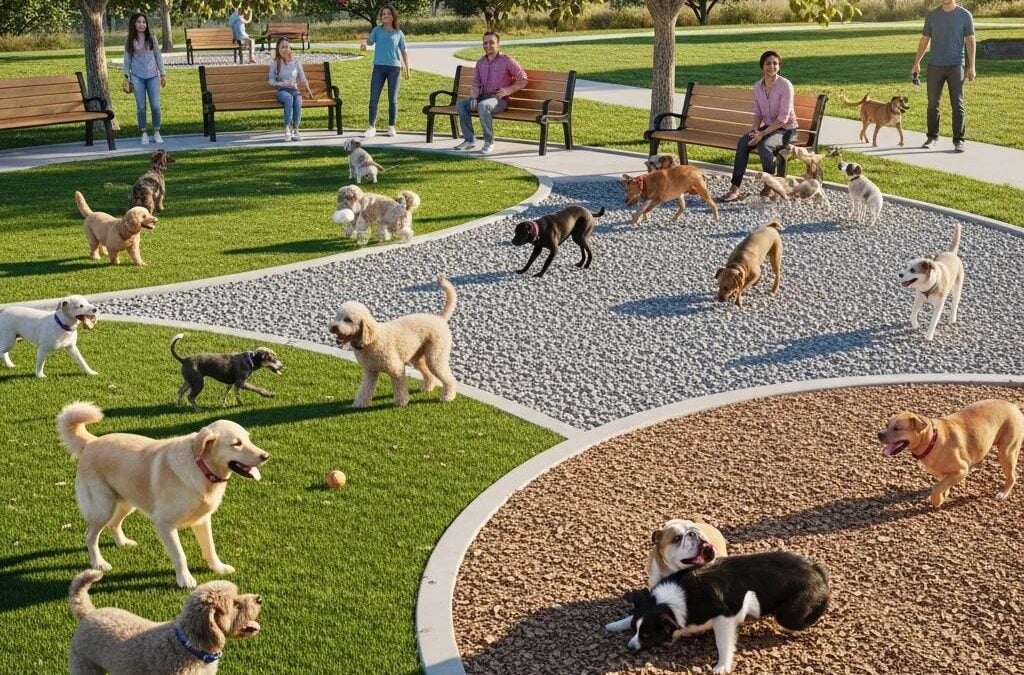
Choosing the Right Surfacing for Dog Parks: Expert Guide to Safe, Durable, and Low-Maintenance Solutions
Choosing Dog Park Surfacing: Safe, Durable & Low-Maintenance Options
- Dog demographics: small vs. large breeds and digging or chewing behaviors.
- Expected daily and peak traffic levels and dedicated activity zones.
- Local climate and rainfall patterns that impact drainage needs.
- Budget constraints including upfront installation and long-term maintenance.
- Accessibility, aesthetics, and community acceptance for public spaces.
How Do Dog Size, Traffic Volume, and Climate Influence Surfacing Choice?
What Budget and Aesthetic Goals Should Guide Material Selection?
Which Dog Park Surfacing Materials Offer the Best Durability and Safety?
| Material | Durability | Maintenance | Drainage | Typical Cost |
|---|---|---|---|---|
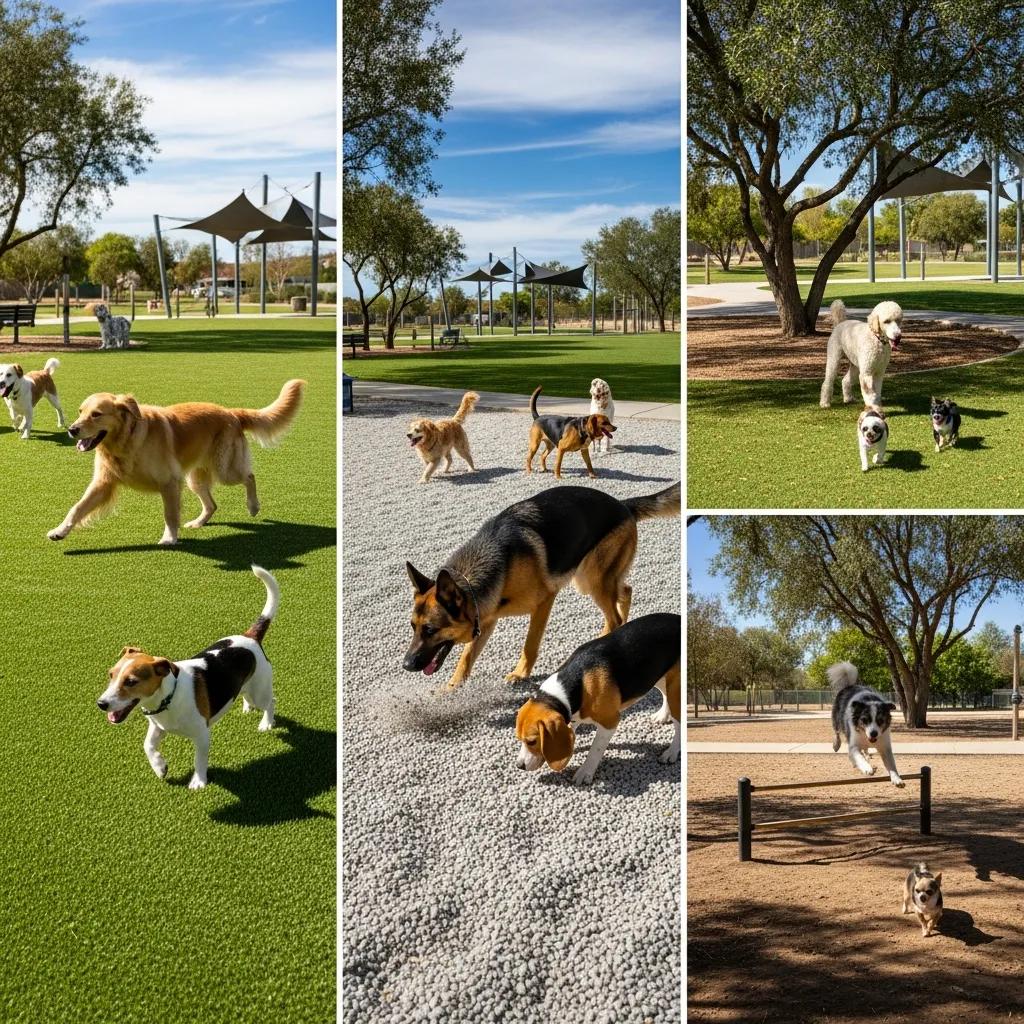
| Artificial turf (commercial) | High; engineered backing resists wear | Regular debris removal, infill top-ups, sanitizing | Excellent with permeable base | Medium–High |
| Pea gravel | Medium; resists erosion but migrates | Raking, replenishment, edging | Very good; highly permeable | Low–Medium |
| Decomposed granite | Medium; compacts over time | Regrading, dust control, edging | Good when stabilized | Low–Medium |
| Rubber mulch | Medium-High durability, cushions falls | Periodic topping up, inspection | Permeable but can trap odor if base not drained | Medium |
| Natural grass | Low under heavy traffic; erodes | Mowing, reseeding, irrigation | Poor in high-use areas | Low upfront, high upkeep |
What Are the Benefits and Maintenance Needs of Artificial Turf for Dog Parks?
How Do Gravel and Decomposed Granite Compare in Drainage and Comfort?
How Does Rubber Mulch Enhance Safety and Cushioning in Dog Parks?

What Are the Ingestion Risks and Durability Factors of Rubber Mulch?
In Which Environments Is Rubber Mulch Most Suitable?
What Are Essential Dog Park Design Elements to Complement Surfacing Choices?
| Design Element | Benefit | Typical Cost Range | Maintenance Frequency |
|---|---|---|---|
| Subsurface drainage (permeable base, French drains) | Prevents mud and standing water | Medium–High | Annual inspection, seasonal cleaning |
| Shade structures (canopies, trees) | Reduces surface heat and user discomfort | Low–Medium | Biannual inspection, cleaning |
| Fencing and gated entry | Security and containment | Low–Medium | Annual check, post-storm repairs |
| Waste and water stations | Hygiene; reduces surface fouling | Low | Daily waste pickup, weekly restocking |
How Do Advanced Drainage Systems Prevent Mud and Odor Buildup?
Why Are Shade Structures, Fencing, and Waste Stations Critical for Dog Parks?
How Can Odor Control and Hygiene Be Optimized in Dog Park Surfacing?
- Daily: Remove solid waste and inspect high-use zones for hazards.
- Weekly: Brush or rake surfaces, redistribute infill, and rinse areas prone to odor.
- Monthly: Apply enzymatic or approved sanitizers to concentrated areas and check drainage inlets.
- Annually: Deep clean base layers as needed and schedule professional inspections of turf seams or drainage lines.
What Role Do Antimicrobial Infills and Cleaning Protocols Play?
How Do Non-Toxic Materials and Maintenance Schedules Ensure Safety?
What Are the Cost Considerations and ROI for Different Dog Park Surfacing Options?
| Surfacing Option | Upfront Cost Estimate | Expected Lifespan | Annual Maintenance Cost | Approx. 10-Year Total Cost |
|---|---|---|---|---|
| Artificial turf (commercial) | Medium–High | 10–15 years | Low–Medium | Medium–High |
| Pea gravel | Low–Medium | 5–10 years | Medium (replenish) | Medium |
| Decomposed granite | Low–Medium | 5–10 years | Medium (regrading) | Medium |
| Rubber mulch | Medium | 7–12 years | Low–Medium | Medium |
| Natural grass | Low upfront | 2–5 years under heavy use | High | High (due to frequent repair) |