

Commercial Playground Equipment Regulations and Safety Standards: Comprehensive Guide for Compliance and Accessibility
Commercial Playground Safety Standards, Compliance and Accessibility
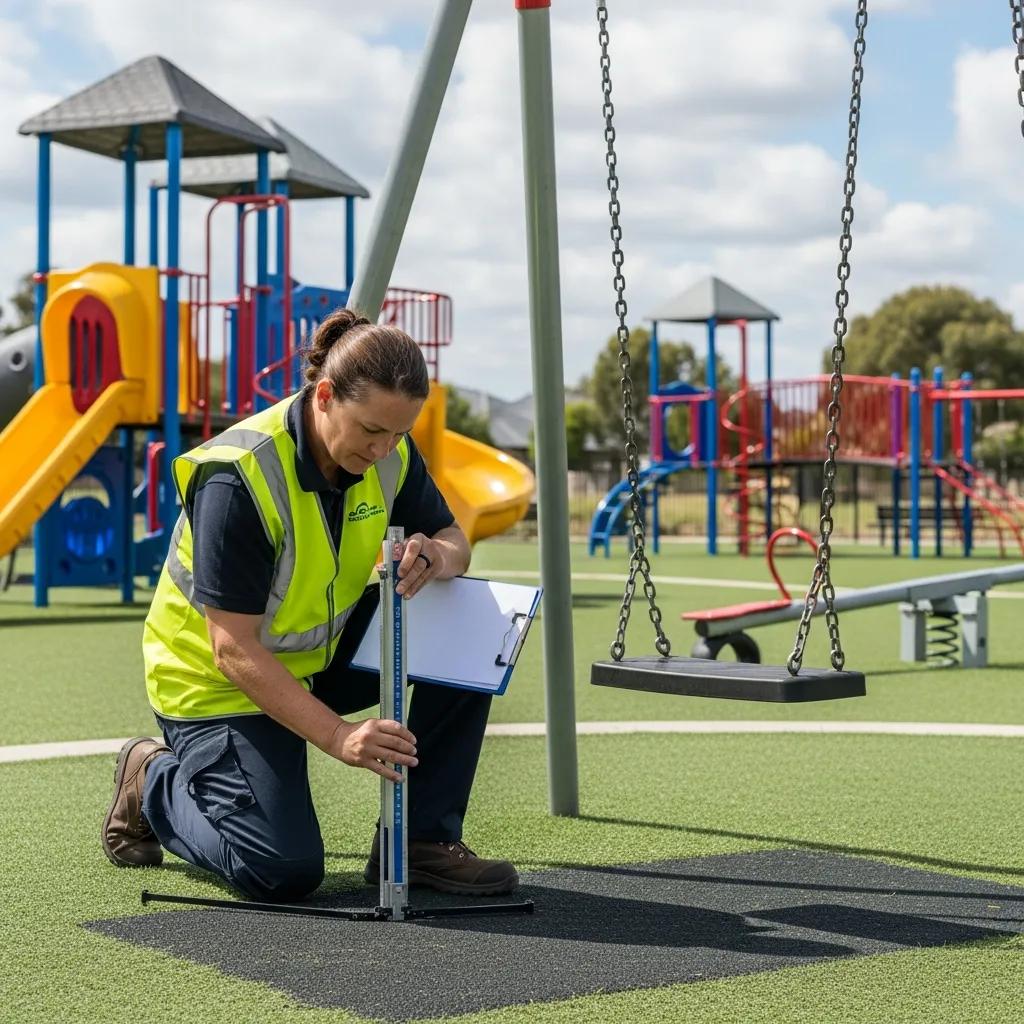
Understanding ASTM F1487: Public Use Playground Equipment Safety Requirements
| Standard | Scope | Practical Implementation |
|---|---|---|
| ASTM F1487 | Public use playground equipment performance and construction | Use for equipment procurement specs, entrapment checks, and installation verification |
| Guardrail & Opening Criteria | Limits on openings and guardrail heights | Apply to elevated platforms and transfer systems to prevent falls and entrapment |
| Labeling & Instructions | Manufacturer-provided warnings and maintenance instructions | Use as basis for owner manuals and inspection checklists |
How ASTM F1292 and F1951 Ensure Impact Attenuation and Accessibility
| Test / Standard | Purpose | Field Consideration |
|---|---|---|
| ASTM F1292 | Impact attenuation testing, CFH rating | Ensure installed depth matches tested conditions; verify compaction and drainage |
| ASTM F1951 | Accessibility testing for mobility devices | Confirm that the installed surface meets mobility device performance used in the ADA evaluation |
| Maintenance Impacts | Long-term performance changes | Plan maintenance to preserve CFH and accessibility over service life |
How Do CPSC Guidelines Enhance Public Playground Safety?
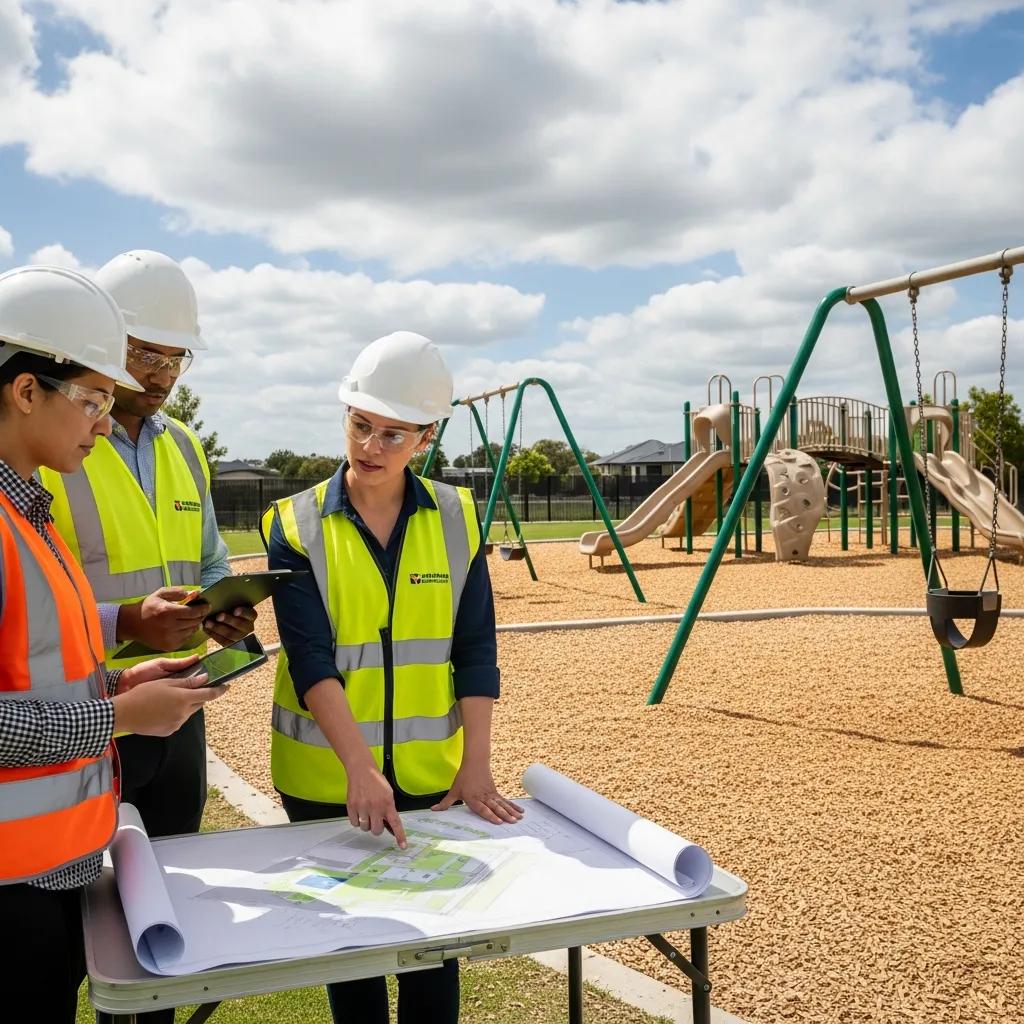
What Are the Core Recommendations in the CPSC Public Playground Safety Handbook?
- Provide compliant fall surfacing that matches equipment critical fall heights and extends under use zones.
- Design and maintain clear use zones free of obstacles and trip hazards to minimize fall impacts.
- Eliminate entanglement and entrapment hazards through part sizing, closures, and guardrail design.
How to Implement CPSC Maintenance and Inspection Guidelines Effectively
- Daily: Visual sweep for debris, vandalism, and obvious hazards.
- Weekly: Check moving parts, fasteners, and surfacing depth in high-traffic areas.
- Annually: Full professional inspection, surfacing testing, and corrective action plan.
What Are the ADA Playground Accessibility Requirements and Inclusive Design Principles?
How Do the 2010 ADA Standards for Accessible Design Apply to Playgrounds?
- ADA clause → Playground element → Compliance checklist
- Accessible route → Pathways to play components → Firm, stable surfacing & slope limits
- Transfer systems → Elevated play components → Reach and landing clearances
What Inclusive Features Promote Equal Access for Children of All Abilities?
- Ground-level play modules: Provide play opportunities without requiring transfers or climbing.
- Adaptive swings and transfer platforms: Enable children with mobility impairments to access swinging and elevated play.
- Sensory panels and musical elements: Support children with sensory processing differences and enrich social play.
Which Playground Safety Surfacing Regulations Must Be Followed?
What Are the Differences Between Engineered Wood Fiber and Poured-in-Place Rubber Surfacing?
| Surface Type | ASTM Compliance | Installation Depth / Notes |
|---|---|---|
| Engineered Wood Fiber (EWF) | Can meet F1292 when installed at specified depths | Requires 6–12+ inches depending on CFH; frequent maintenance to retain depth |
| Poured-in-Place (PIP) Rubber | Typically meets F1292 and F1951 when tested as a system | Installed to manufacturer-specified depth and base; offers immediate ADA accessibility |
| Rubber Mulch | May meet F1292 under controlled installation | Loose-fill product requiring containment and periodic topping |
How Does Critical Fall Height Determine Surfacing Depth and Use Zones?
- Measure equipment maximum fall height and reference CFH requirements from testing.
- Install surfacing to the tested depth and base conditions specified in lab reports and manufacturer instructions.
- Monitor and maintain surfacing depth through scheduled inspections and replenishment where necessary.
What Local Regulations and Permitting Processes Affect Commercial Playgrounds in Charlotte, NC and Charleston, SC?
| Jurisdiction | Permit / Review Type | Typical Requirements / Timeline |
|---|---|---|
| Charlotte-Mecklenburg | Site plan review & building/permit review | Submissions often include layout, surfacing spec, ADA accessibility plan, drainage; timeline varies with scope |
| Charleston County | Permit and inspection coordination | Requires detailed plans for equipment placement, surfacing, and inspections; allow time for county scheduling |
| Common Deliverables | Drawings, specifications, maintenance plan | Include equipment spec sheets, surfacing test reports, and inspection/maintenance schedules |
What Are the Charlotte-Mecklenburg Playground Codes and Compliance Requirements?
- Permit checklist: plan set, surfacing specs, ADA route plan, maintenance/inspection schedule.
- Common issue: mismatch between tested surfacing conditions and proposed field installation.
How to Navigate Charleston County Playground Permitting and Inspection Procedures
- Prepare complete documentation including equipment specifications, surfacing test reports, and ADA route diagrams.
- Schedule pre-construction review with county authorities where possible to clarify expectations.
- Document inspections and corrective actions to demonstrate compliance at final inspection.
How Does Shade and Play Pros Ensure Compliance with Safety and Accessibility Standards?
What Is the Turnkey Project Management Approach for Safe Playground Installation?
| Project Phase | Key Tasks | Deliverable |
|---|---|---|
| Site Assessment | Safety audit, measurements, constraints | Site assessment report |
| Design & Permitting | Equipment layout, surfacing specs, permit submissions | Permit-ready drawings |
| Installation & QA | Licensed installers, surfacing install, testing | Test reports, maintenance plan |