NC Commercial Playground Structures: Equipment, Safety & Installation

Commercial playground structures shape active childhoods and community vitality across North Carolina, yet navigating equipment types, safety standards, surfacing options, and installation steps can feel overwhelming. This guide delivers clear definitions, practical mechanisms, and actionable benefits for each playground category, helping municipalities, schools, parks & recreation departments, HOAs, and developers make informed decisions. You will explore main equipment types, safety and compliance requirements, surfacing materials, planning and installation processes, the importance of inclusive design, emerging trends, and expert selection criteria. By the end, you’ll understand how to partner with shadeandplaypros.com for turnkey design, supply, and installation tailored to North Carolina’s regulations and climate.

What Are the Main Types of Commercial Playground Equipment in North Carolina?

Commercial playground equipment falls into five core categories—traditional structures, freestanding elements, inclusive systems, themed/nature-inspired designs, and specialty play courses—each delivering unique play value, development opportunities, and community benefits. Understanding these core equipment categories sets the stage for exploring their unique benefits and applications in local projects.

What Are Traditional Playground Structures and Their Benefits?

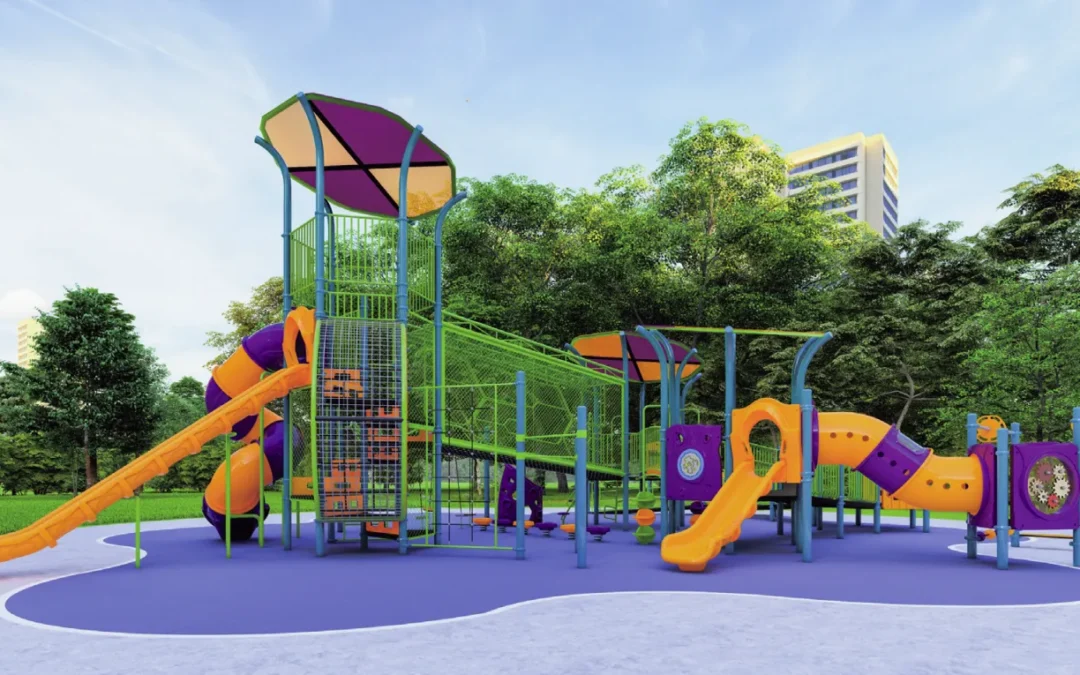
Traditional playground structures combine swings, slides, climbers, and monkey bars into integrated systems that promote gross-motor development, social interaction, and imaginative play from early childhood through grade school.

  • Swings deliver vestibular stimulation and social turns among peers.
  • Slides build confidence, balance, and spatial awareness through controlled descent.
  • Climbers strengthen upper-body muscles and coordination via ladders, nets, or rock-wall panels.
  • Monkey bars enhance grip strength, shoulder stability, and sequential planning skills.

These classic assemblies support broad age ranges and serve as reliable anchors in parks, schools, and community centers, preparing sites for advanced or specialized additions.

Freestanding elements such as spinners, spring riders, and seesaws offer targeted play experiences, reinforce balance mechanisms, and allow flexible layout options in compact or renovation projects.

  • Spinners engage vestibular senses and core stability through circular motion.
  • Spring riders provide rocking motion that strengthens postural muscles.
  • Seesaws encourage cooperative play and teach weight distribution.

Because these components require minimal foundation work, they integrate seamlessly into existing playground pads, filling activity gaps and extending overall play variety.

How Does Inclusive and Accessible Playground Equipment Support All Children?
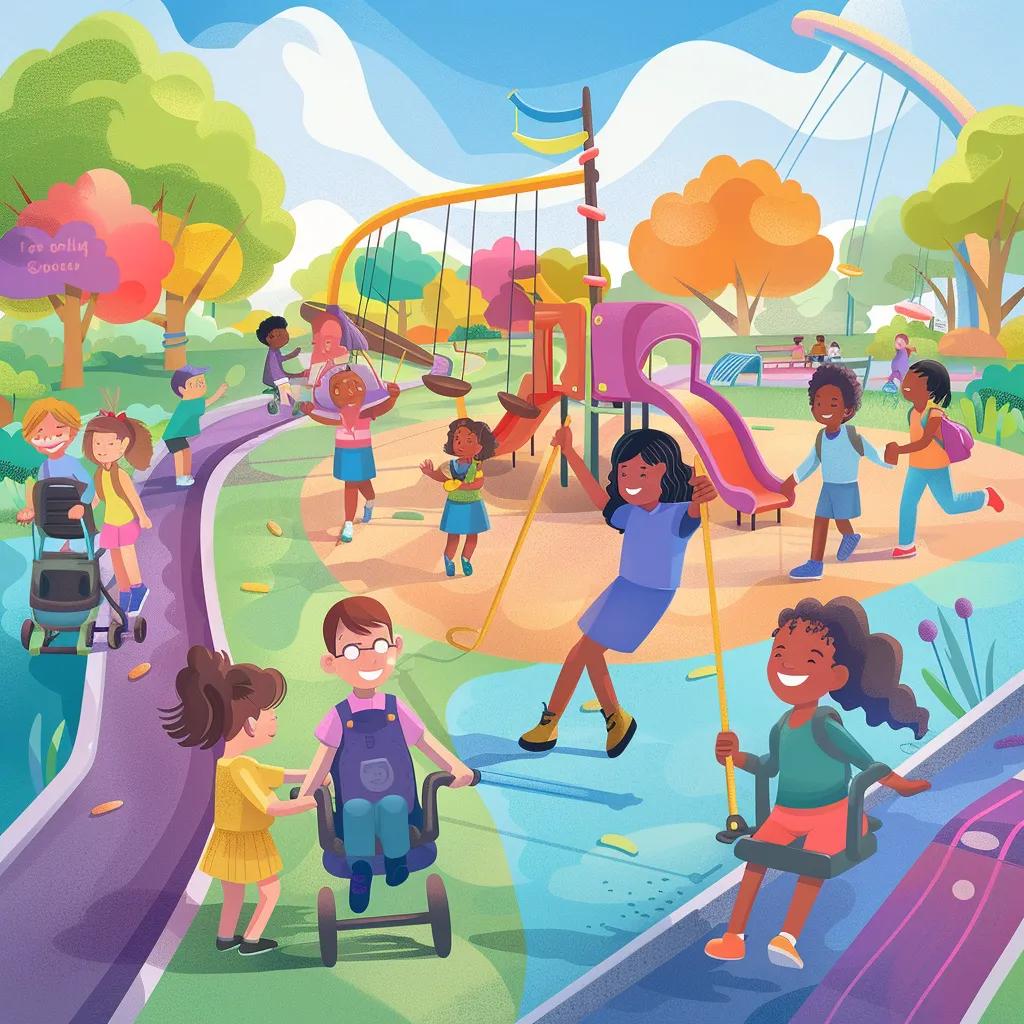
Colorful playground scene with children engaging in various activities, including swinging, sliding, and playing together, emphasizing inclusive play and community interaction in a vibrant outdoor setting.

Inclusive playground equipment incorporates ADA-compliant ramps, transfer stations, and sensory panels to eliminate barriers, foster universal access, and promote multi-sensory engagement for children of all abilities.

  • Ramps and transfer platforms enable wheelchair users to access elevated play decks.
  • Sensory panels deliver tactile, auditory, and visual stimuli for neurodiverse learners.
  • Ground-level interactive activities ensure simultaneous play among peers.

By designing around universal design principles, communities cultivate empathy, inclusion, and equitable recreational opportunities.

What Are Themed and Nature-Inspired Playground Designs?

Themed and nature-inspired playgrounds blend natural materials—logs, boulders, plantings—with custom decorative motifs to spark imagination, environmental stewardship, and creative storytelling.

  • Treehouse platforms and wooden bridges simulate forest exploration.
  • Boulders and balance beams crafted from timber logs promote risk-managed play.
  • Custom themes (pirate ships, wildlife sanctuaries) reinforce educational narratives.

These tailored environments invite unstructured discovery and integrate seamlessly into park landscapes and school campuses.

What Specialty Play Structures Are Emerging in North Carolina?

Specialty play structures such as ninja warrior courses, water play zones, and interactive digital installations deliver high-intensity fitness challenges, sensory cooling, and technology-enhanced experiences that intrigue older children and families.

  • Ninja warrior obstacles develop agility, strength, and problem-solving under timed conditions.
  • Water features—spray decks, splash pads—provide relief from summer heat while teaching water safety.
  • Interactive panels and musical playstations merge physical activity with cognitive stimulation.

These innovative systems meet evolving user expectations and broaden the appeal of community playspaces.

How Do Safety and Compliance Standards Affect Commercial Playground Structures in North Carolina?

Worker in safety vest and hard hat inspecting playground equipment, holding checklist, surrounded by colorful play structures in park setting.

Safety and compliance standards—from CPSC guidelines to ASTM certifications and ADA requirements—establish design criteria, spacing dimensions, and surfacing specifications that directly influence equipment selection, layout, and maintenance to reduce injury risk and ensure universal access.

What Are the Key CPSC Playground Safety Guidelines?

The CPSC Public Playground Safety Handbook specifies protective surfacing depths, fall-height limits, equipment clearances, and maintenance protocols to mitigate fall hazards and pinch points.

  • Maintain at least 12 inches of loose-fill material or 2 inches of poured-in-place rubber under fall zones.
  • Ensure 6–8 feet of unobstructed use zones around swings and slides.
  • Adhere to maximum fall heights (60 inches for slides, 72 inches for platforms).
  • Conduct monthly surface inspections and annual structural checks.

Following these guidelines enhances user protection and aligns with liability-limiting best practices.

CPSC Playground Safety Guidelines

The CPSC Public Playground Safety Handbook provides detailed guidelines for playground safety, including recommendations for surfacing depths, fall-height limits, and equipment clearances to minimize injury risks. Following these guidelines is crucial for ensuring user protection and aligning with best practices to limit liability.

U.S. Consumer Product Safety Commission, Public Playground Safety Handbook (2022)

This source directly supports the article’s discussion of CPSC guidelines and their importance in playground safety.

How Do ASTM Standards Influence Playground Equipment Selection?

ASTM standards such as F1487 (play equipment safety) and F1292 (impact attenuation) define performance thresholds, material testing procedures, and certification processes that guide procurement of durable, compliant products.

  • ASTM F1487 mandates structural integrity tests under dynamic loads.
  • ASTM F1292 requires laboratory-tested impact attenuation values for surfacing systems.
  • ASTM F2373 addresses accessibility guidelines for play components.

Choosing ASTM-certified equipment assures resilience under heavy commercial use and simplifies regulatory compliance.

ASTM Standards for Playground Equipment

ASTM International develops and publishes standards, such as F1487 and F1292, that define performance thresholds, material testing procedures, and certification processes for playground equipment. Choosing ASTM-certified equipment assures resilience under heavy commercial use and simplifies regulatory compliance.

ASTM International, ASTM F1487 Standard Consumer Safety Performance Specification for Playground Equipment for Public Use (2023)

This citation supports the article’s explanation of how ASTM standards influence playground equipment selection and ensure compliance.

What Are the ADA Compliance Requirements for Playgrounds in NC?

ADA standards demand accessible routes, clear floor space, and transfer mechanisms that enable children with mobility devices to engage fully in playground activities.

  • Provide at least one accessible route with a maximum 1:12 slope.
  • Include a 30×48-inch firm access zone at ground-level and elevated play components.
  • Equip transfer platforms at 11–18 inches above ground for safe wheelchair transition.
  • Offer ground-level play elements equal in variety to elevated features.

Meeting these requirements promotes inclusivity and fulfills state and federal accessibility obligations.

How Should Commercial Playgrounds Be Inspected and Maintained for Safety?

Regular inspections and maintenance ensure ongoing compliance with safety standards, preserve material integrity, and address wear-and-tear before hazards emerge.

  • Schedule daily visual checks for debris, damage, and drainage issues.
  • Perform monthly detailed inspections of hardware, connections, and surfacing depth.
  • Conduct annual structural audits by certified playground inspectors.
  • Replace worn or non-compliant components immediately and document all actions.

A proactive maintenance regimen extends service life, reduces liability, and safeguards user well-being.

What Are the Best Commercial Playground Surfacing Options for North Carolina?

Playground surfacing choices—poured-in-place rubber, engineered wood fiber, rubber mulch, artificial turf, and durable borders—balance impact attenuation, accessibility, durability, and aesthetic integration within North Carolina’s climate.

What Are the Benefits of Poured-in-Place Rubber Surfacing?

Poured-in-place rubber surfacing combines a resilient cushion layer and a wear-resistant top coat to deliver consistent impact protection, ADA accessibility, and low maintenance.

Surfacing TypeImpact AttenuationAccessibility
Poured-in-Place RubberMeets ASTM F1292 standards for falls up to 10 ftFirm, seamless surface accommodates wheelchairs and strollers

This seamless system resists UV degradation and provides a safe, fully accessible playspace that aligns with both CPSC and ADA standards.

How Does Engineered Wood Fiber Compare for Playground Safety?

Engineered wood fiber (EWF) offers cost-effective impact attenuation and natural aesthetics but requires regular replenishment and edging for optimum performance.

  • Pros: Biodegradable, good drainage, warm surface feel.
  • Cons: Requires annual topping-up to maintain depth, potential for mold growth in damp climates.

EWF remains a popular choice for budget-conscious projects, provided maintenance schedules align with local humidity and rainfall patterns.

What Are the Pros and Cons of Rubber Mulch Surfacing?

Rubber mulch delivers recycled-material benefits, strong impact resistance, and rapid drainage but demands confinement and periodic raking to retain coverage.

Surface MaterialBenefitConsideration
Rubber MulchHigh impact attenuationEdging needed to contain loose fill; occasional raking required

This eco-friendly option appeals to sustainability goals but relies on robust border systems to maintain consistency.

When Is Artificial Turf Suitable for Commercial Playgrounds?

Artificial turf replicates grass aesthetics while offering UV-stable, low-maintenance cushioning and rapid water dispersal for multi-use athletic areas adjacent to playground zones.

  • Ideal for mixed-use parks combining sports fields and play areas.
  • Provides firm drainage channels but requires infill topping over time.

Proper underlayment selection ensures compliance with impact attenuation guidelines and supports all-weather usability.

How Do Playground Borders and Edging Enhance Safety and Durability?

Borders constructed from recycled plastic lumber, timber, or steel contain loose-fill surfacing, prevent erosion, and define use zones to protect adjacent landscaping and foot traffic.

  • Containment walls maintain engineered wood fiber and mulch depths.
  • Curbs and timbers separate turf areas from play surfacing.
  • Integrated drainage channels preserve material integrity.

Reliable edging systems uphold safety layer consistency and contribute to a polished playground appearance.

How Is Commercial Playground Planning and Installation Managed in North Carolina?

A structured process—site assessment, conceptual design, engineering review, permitting, installation, and inspection—ensures playground longevity, safety compliance, and alignment with community goals in North Carolina.

What Are the Steps in the Playground Design Process for NC Projects?

The playground design process progresses through consultation, schematic layouts, 3D renderings, budgeting, and compliance review to align stakeholder vision with technical requirements.

  1. Initial site visit and stakeholder needs assessment.
  2. Conceptual layout and equipment selection.
  3. Detailed 3D visualization and material specification.
  4. Permitting support and ASTM/CPSC compliance checks.
  5. Final budget approval and project scheduling.

Each stage builds upon the previous to deliver a customized, code-compliant play environment.

What Installation Services Are Available for Commercial Playgrounds in North Carolina?

Turnkey services in North Carolina include site preparation, equipment delivery, assembly, surfacing installation, and final inspection under a single contract for streamlined project delivery.

  • Full turnkey installations minimize coordination burdens.
  • Certified installation crews ensure proper anchor depths and surfacing compaction.
  • Post-installation inspections verify CPSC, ASTM, and ADA compliance.

This end-to-end approach by shadeandplaypros.com reduces delays, manages risk, and guarantees quality workmanship.

How Does Site Preparation Impact Playground Longevity and Safety?

Site preparation—soil testing, grading, drainage planning, and compaction—establishes a stable foundation for equipment anchoring and surfacing performance.

  • Proper grading prevents water pooling under equipment.
  • Geotextile fabrics inhibit weed growth beneath loose fillings.
  • Compacted sub-base enhances structural stability for anchors and surfacing.

A well-prepared site mitigates erosion, protects equipment integrity, and supports lasting safety measures.

What Funding and Grant Opportunities Exist for North Carolina Playgrounds?

North Carolina offers grant programs through state recreation agencies, federal Community Development Block Grants, and private foundations to help municipalities and schools fund playground projects.

  • State Parks and Recreation Trust Fund supports local park enhancements.
  • USDA Community Facilities grants underwrite rural playground construction.
  • Private foundations offer grants targeting inclusive and adaptive play installations.

Identifying and applying for these resources can significantly reduce up-front capital expenditures and accelerate project timelines.

Why Is Inclusive Playground Equipment Essential for North Carolina Communities?

Inclusive playground equipment fosters social cohesion, cognitive development, and physical health by ensuring all children, regardless of ability, can engage safely, explore creatively, and build peer relationships in shared play environments.

What Features Define an Inclusive Playground?

Inclusive playgrounds feature ramps, transfer stations, sensory walls, and quiet zones that support varied mobility levels and sensory needs while encouraging universal engagement.

  • Ramps comply with ADA slope requirements and lead to elevated play decks.
  • Transfer stations at strategic heights allow seating transitions from mobility devices.
  • Sensory walls incorporate tactile panels, musical chimes, and mirror features.

Together, these elements create an environment where every child can interact meaningfully and safely.

How Do Sensory Play Elements Benefit Children of All Abilities?

Sensory play elements activate multiple neural pathways—tactile, auditory, visual—and promote self-regulation, language development, and fine-motor skills among neurodiverse and typically developing children alike.

  • Tactile panels strengthen hand-eye coordination.
  • Sound boards encourage social communication through shared play.
  • Visual feature walls support pattern recognition and focus.

Multi-sensory engagement cultivates cognitive flexibility and inclusive peer interaction.

What Are Adaptive Swings and Motion Play Equipment?

Adaptive swings and motion play equipment—high-back seats, harnessed spinners, and accessible gliders—provide vestibular stimulation and safe motion experiences for users with limited trunk control or sensory processing needs.

  • High-back swings stabilize posture for children with hypotonia.
  • Inclusive spinners feature locking seats and push-assist bars.
  • Accessible gliders offer low-impact bilateral movement.

These dynamic systems support physical therapy objectives and inclusive recreation.

What Are the Community Benefits of Inclusive Playgrounds in NC?

Inclusive playgrounds yield broad community benefits such as increased park usage, enhanced social integration, positive public perception, and equitable recreation for all residents.

  • Municipalities report higher attendance at inclusive playspaces.
  • Schools observe improved peer inclusion and empathy development.
  • HOAs and developers strengthen community appeal and property values.

Investing in universal play design fosters a culture of respect and shared enjoyment.

Emerging playground trends blend nature-inspired features, interactive technology, fitness challenges, and sustainable materials to elevate play experiences, promote environmental stewardship, and meet modern user expectations across North Carolina communities.

How Are Nature-Inspired and Themed Playgrounds Shaping Play Experiences?

Nature-inspired and themed playgrounds integrate logs, rock scrambles, and living plantings with educational signage and custom motifs to immerse children in ecological narratives and imaginative adventures.

  • Rain gardens adjacent to play areas teach water cycles.
  • Wildlife-themed art panels connect play with local ecosystems.

This approach fosters environmental awareness and strengthens emotional bonds with nature.

What Role Does Technology Play in Modern Playground Equipment?

Technology-enhanced playground equipment—interactive panels, sensor-based games, and augmented reality experiences—engages digital-native generations, promotes STEAM learning, and extends play value beyond physical components.

  • Interactive LED panels respond to movement and sound.
  • AR-enabled treasure hunts overlay digital challenges on real structures.

These digital integrations encourage problem-solving and cooperative learning in outdoor settings.

What Is the Growing Popularity of Ninja Warrior and Obstacle Course Playgrounds?

Ninja warrior and obstacle course playgrounds offer dynamic challenge pathways, timed circuits, and fitness-oriented apparatus that appeal to older children and adult users seeking strength, coordination, and teamwork opportunities.

  • Cargo nets, warped walls, and balance beams test agility and resilience.
  • Timed leaderboards add motivation and replay value.

By blending athletic training with play, these courses support community health initiatives and intergenerational engagement.

How Are Sustainable and Eco-Friendly Materials Used in NC Playgrounds?

Sustainable materials—recycled plastic lumber, FSC-certified wood, rubber mulch from reclaimed tires—reduce environmental impact, enhance durability, and demonstrate community commitment to green practices.

  • Recycled plastic rails resist moisture and insect damage.
  • FSC wood decking provides renewable, responsibly sourced play surfaces.

Implementing eco-friendly components aligns playground projects with broader sustainability goals.

How Can You Choose the Right Commercial Playground Structures for Your North Carolina Project?

Selecting the ideal playground involves assessing age-appropriateness, durability, safety compliance, community needs, and budget, then partnering with seasoned professionals who understand North Carolina’s regulations and climate specifics.

What Factors Should Influence Playground Equipment Selection?

Equipment selection should balance age ranges, material resilience, safety features, and maintenance requirements to maximize long-term play value and minimize operational costs.

  • Age-appropriateness ensures developmental milestones are supported.
  • Material choices (steel, plastic, wood) affect longevity in humid climates.
  • Safety features (guardrails, non-entrapment spacing) mitigate injury risks.

Weighing these factors guides informed equipment investment.

How Do Local Regulations and Climate Affect Playground Choices in NC?

North Carolina’s building codes, hurricane-related wind requirements, humidity levels, and UV exposure influence structural engineering, material selection, and surfacing drainage design.

  • Coastal regions demand corrosion-resistant hardware and enhanced anchoring.
  • Inland humidity necessitates rot-resistant materials and mold-preventive treatments.

Understanding local conditions ensures playgrounds remain safe and durable year after year.

What Are the Cost Considerations for Commercial Playground Installation?

Total project costs encompass equipment procurement, surfacing installation, site preparation, labor, permits, and ongoing maintenance, with budgeting that anticipates future replacement or refurbishment.

  • Equipment typically accounts for 50–60% of overall costs.
  • Surfacing and site work contribute 30–40% based on material choice.
  • Permitting and design fees add the remaining budget allocation.

A transparent cost breakdown fosters accurate financial planning and value assessment.

How Does Shade and Play Pros Support NC Clients with Design and Installation?

Shade and Play Pros delivers end-to-end solutions—design consultation, 3D visualizations, code compliance support, professional installation, and maintenance training—ensuring playground projects in North Carolina meet safety, accessibility, and aesthetic objectives.

  • Regional expertise navigates local permitting and climate challenges.
  • Certified installation teams uphold CPSC, ASTM, and ADA standards.
  • Ongoing support includes inspection schedules and refurbishment services.

Partnering with Shade and Play Pros simplifies project delivery and maximizes community impact.

Commercial playground structures in North Carolina demand a strategic blend of thoughtful design, rigorous safety compliance, durable surfacing, and inclusive features to create engaging, secure, and welcoming playspaces. By exploring equipment categories, regulatory frameworks, surfacing options, and innovative trends, stakeholders can craft playground environments that foster physical development, social inclusion, and environmental stewardship. Investing in expert planning and installation ensures every North Carolina community benefits from safe, accessible, and inspiring recreational assets. Request a consultation to begin realizing your ideal playground project with shadeandplaypros.com.