Certified Custom Playground Installation Services in North Carolina

Playground equipment installation services in North Carolina deliver turnkey, certified, and custom play environments that elevate safety and engagement for schools, parks, HOAs, and commercial properties. Balancing strict ASTM, CPSC, IPEMA, and ADA standards with tailored design, these services ensure every playground supports healthy development and community value. In this guide, we explore four core themes:

  1. Why professional installation matters for safety, compliance, and hassle-free management
  2. The full spectrum of equipment solutions across educational, commercial, municipal, and residential sites
  3. Safety surfacing options and their protective benefits
  4. End-to-end processes from site assessment through maintenance, plus trends shaping North Carolina play spaces

Why Choose Professional Playground Equipment Installation Services in North Carolina?

Professional playground installation services combine expert planning, certified execution, and rigorous compliance to transform outdoor spaces into safe, durable play areas. By integrating engineering best practices with local regulations, these services reduce liability and optimize user experience.

How Do Certified Installers Ensure Playground Safety and Compliance?

Certified installers perform site evaluations, anchor equipment to engineered footings, and apply ASTM F1487, CPSC Public Playground Safety standards, and IPEMA certification checks. They verify fall-height clearances, secure surfacing depths, and provide ADA-compliant routes. This process minimizes injury risk, meets regulatory requirements, and delivers peace of mind for municipalities and schools.

Playground Safety Standards

Playground safety is significantly improved by adhering to standards set by organizations like ASTM and CPSC. These standards provide guidelines for design, installation, and maintenance, which are essential for minimizing injuries and ensuring a safe play environment for children.

American Society for Testing and Materials (ASTM), ASTM F1487-23: Standard Consumer Safety Performance Specification for Playground Equipment for Public Use (2023)

This standard is directly relevant as it is referenced in the article regarding the importance of adhering to ASTM standards for playground safety.

What Are the Benefits of Turnkey Playground Installation Solutions?
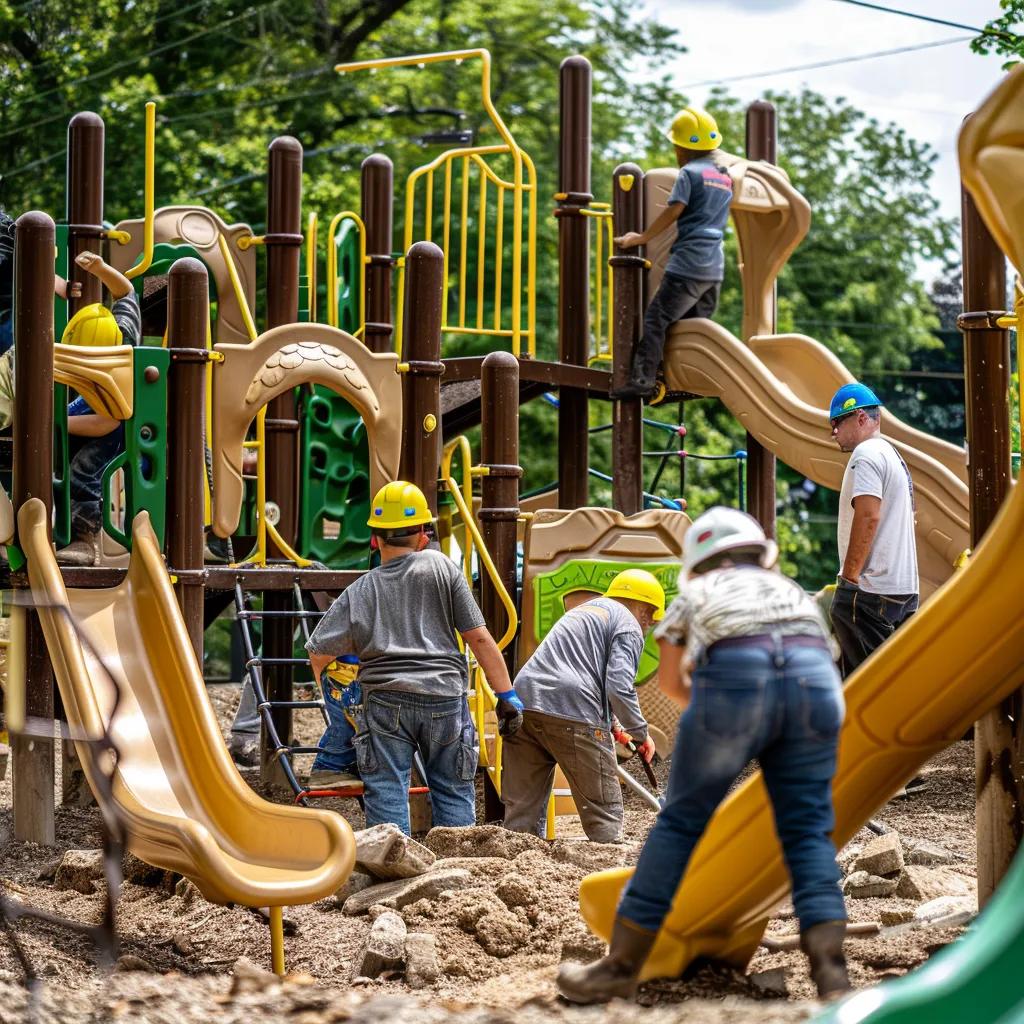
Workers applying poured-in-place rubber surfacing in a playground, focusing on safety and compliance in maintenance.

Turnkey playground installation services assume responsibility for every phase—design, permitting, equipment procurement, site preparation, installation, and final inspection. Clients benefit from:

  • Single-point accountability for schedule and budget
  • Streamlined coordination with suppliers and inspectors
  • Consistent quality control and warranty coverage

This holistic approach ensures projects stay on time, on budget, and meet all safety benchmarks.

How Does Custom Playground Design Meet North Carolina Client Needs?

Custom playground design adapts play elements to site constraints, age groups, community themes, and budgetary parameters. Design teams use 3D renderings, thematic consultations, and demographic analyses to specify structures that:

  • Encourage inclusive play
  • Fit irregular spaces
  • Reflect local culture

By aligning design with client goals, ShadeAndPlayPros.com delivers unique, engaging playgrounds that resonate with end users and stakeholders.

What Types of Playground Equipment Installation Services Are Available in North Carolina?

North Carolina playground installers offer specialized solutions for schools, commercial developers, parks, and residential communities. Each client type receives equipment tailored to its functional requirements and maintenance expectations.

Which Playground Equipment Is Best for Schools and Educational Facilities?

School playground installations prioritize age-appropriate play pods, climbing nets, interactive panels, and shaded learning areas. Equipment features include:

  • Low-impact slides and swings certified for elementary use
  • Sensory panels supporting special-needs students
  • Group play zones aligned with physical education curricula

These assemblies foster cognitive, social, and motor-skill development in safe, supervised environments.

What Commercial Playground Equipment Options Serve Businesses and Developers?

Commercial-grade playgrounds for restaurants, hotels, and mixed-use developments emphasize durability, vandal resistance, and brand integration. Options include:

  • Heavy-duty steel-core structures
  • UV-stabilized plastics and powder-coated metals
  • Integrated seating or advertising panels

This equipment withstands high traffic and aligns with property aesthetics to enhance guest experience and property value.

How Are Park and Recreation Playgrounds Designed and Installed?

Public park playgrounds blend open-air fitness stations, inclusive swings, natural play elements, and communal seating. Installers coordinate with parks & recreation departments to address:

  • ADA access paths
  • Community input on play features
  • Durable surfacing for heavy seasonal use

Community engagement and regulatory approval drive designs that serve diverse age ranges and abilities.

What Playground Solutions Are Tailored for HOAs and Residential Communities?

HOA playground projects focus on neighborhood integration, low maintenance, and budget-conscious surfacing. Common services include:

  • Pre-approved equipment packages for architectural review
  • Modular shade structures and seating
  • Annual maintenance contracts

These solutions streamline approval processes and extend equipment lifespan through proactive care.

How Does Playground Safety Surfacing Installation Enhance Protection in North Carolina Playgrounds?

Colorful poured-in-place rubber surfacing showcasing impact-absorbing materials in a playground setting, emphasizing safety and ADA compliance.

Safety surfacing installation defines impact absorption, ADA compliance, and longevity under foot traffic and weather. Proper surfacing transforms equipment zones into cushioned play decks that mitigate fall injuries.

What Are the Advantages of Poured-in-Place Rubber Surfacing?

Poured-in-place rubber surfacing combines EPDM granules with polyurethane binder to create a seamless, shock-absorbing layer.

EntityAttributeValue
Poured-in-Place RubberImpact AbsorptionReduces G-forces on impact by up to 80%
ADA ComplianceSmooth, slip-resistant pathways
DurabilityLifespan of 10–15 years with routine cleaning

Seamless coverage prevents trip hazards and accommodates specialized markings or logos.

ADA Compliance in Playgrounds

Ensuring playgrounds are accessible to children of all abilities is a crucial aspect of inclusive design. ADA guidelines provide specific requirements for accessible routes, surfacing, and equipment, allowing children with disabilities to participate fully in play activities.

U.S. Department of Justice, Americans with Disabilities Act (ADA) Standards for Accessible Design (2010)

This citation supports the article’s emphasis on ADA compliance in playground design and installation, highlighting the importance of creating inclusive play spaces.

How Do Engineered Wood Fiber and Other Surfacing Options Compare?

Engineered wood fiber (EWF), rubber mulch, and synthetic turf each offer unique trade-offs in cost, maintenance, and fall-height rating.

EntityAttributeValue
Engineered Wood FiberCostLower initial cost
MaintenanceRequires annual raking and topping up
Safety RatingUp to 8 ft fall height
Synthetic TurfAppearanceYear-round green, low allergen
DrainageExcellent water flow

Understanding these comparisons helps clients select the optimal surfacing for budget and safety goals.

Why Is Compliance with ASTM, CPSC, and IPEMA Standards Critical for Safety Surfacing?

Adhering to ASTM F1292 (impact attenuation), CPSC guidelines, and IPEMA certification ensures surfacing materials meet scientifically tested performance metrics. Certified products deliver reliable energy absorption, consistent installation depth, and documented lifespan assessments—key factors in injury prevention and regulatory inspections.

What Is the Step-by-Step Process for Playground Equipment Installation in North Carolina?

A structured, phased workflow ensures timely, code-compliant playground installations. From initial outreach through final approvals, a clear roadmap guides every stakeholder.

How Is Site Assessment and Preparation Conducted?

Site assessment begins with a comprehensive survey of soil composition, drainage patterns, and existing obstacles. Installers then:

  • Mark utility lines and measure fall zones
  • Excavate to engineered subgrade specifications
  • Compact base material and install perimeter containment

What Are the Key Phases of Equipment Delivery and Installation?

Certified installers follow a multi-phase schedule:

  1. Equipment Delivery: Unloading modules and verifying inventory
  2. Assembly: Framing, anchoring posts, and securing platforms
  3. Surfacing: Laying rubber or wood fiber to specified depths
  4. Quality Control: Torque checks, level verification, and finish inspections

How Are Safety Inspections and Final Approvals Managed?

Post-installation audits by Certified Playground Safety Inspectors (CPSI) evaluate compliance with ASTM, CPSC, and ADA criteria. Inspectors document:

  • Structural integrity of connections
  • Surfacing depth and drainage performance
  • Accessibility routes and signage

Approved installations receive a compliance certificate, enabling safe public use.

How Can North Carolina Clients Benefit from Playground Maintenance and Repair Services?

Regular maintenance and timely repairs preserve safety, extend equipment life, and protect community investments in play spaces.

What Routine Maintenance Practices Extend Playground Equipment Lifespan?

Routine maintenance includes monthly visual inspections, quarterly cleaning of debris, and annual hardware tightening.

  • Lubricate moving parts to prevent wear
  • Re-coat metal surfaces with protective paint
  • Replenish engineered wood fiber or rubber infill

When Is Playground Repair Necessary and How Is It Performed?

Repair triggers include loose bolts, cracked components, or worn surfacing. Professional technicians:

  • Replace damaged panels and rusted fasteners
  • Patch or re-pour rubber surfacing areas
  • Realign misleveled structures

Prompt repair reduces liability and restores playability quickly.

How Do Safety Audits Support Ongoing Playground Compliance?

Annual safety audits by CPSI professionals identify emerging hazards before they escalate. Audit reports:

  • Detail observed deficiencies
  • Recommend corrective actions
  • Track maintenance histories

This ongoing oversight demonstrates a proactive commitment to child safety and regulatory adherence.

How Does Shadeandplaypros.com Support North Carolina Clients with Playground Consultation and Design?

Shadeandplaypros.com combines local expertise with design innovation to guide clients from concept to blueprints, ensuring cost-effective, regulation-ready proposals.

What Does a Comprehensive Playground Site Assessment Include?

A full site assessment covers:

  • Topographic mapping and soil testing
  • Sun/shade analysis for thermal comfort
  • Stakeholder interviews to capture user needs

These insights form the technical brief for design and budgeting.

How Are Custom Playground Designs Developed and Visualized?

Design teams create 2D plans and 3D renderings that integrate equipment, surfacing, and thematic elements. Clients review virtual walkthroughs to refine color schemes, safety zones, and ADA pathways before fabrication begins, ensuring alignment with expectations.

How Does Consultation Help Plan Budgets and Project Timelines?

Consultations establish:

  • Detailed cost estimates broken into equipment, surfacing, labor, and permits
  • Phased schedules to fit school calendars or seasonal park openings
  • Value-engineering options to optimize ROI without compromising safety

This structured planning reduces surprises and accelerates project delivery.

Which North Carolina Locations and Client Types Are Served by Playground Equipment Installation Experts?

North Carolina’s diverse regions—from Raleigh’s urban campuses to Asheville’s mountain-town parks—benefit from tailored installation services that respect local codes and community character.

What Playground Installation Services Are Available in Raleigh and Surrounding Areas?

In Raleigh and Wake County, installers navigate municipal regulations, historic district guidelines, and stormwater requirements. Services include equipment retrofit, ADA upgrades, and rapid-deployment kits for charter schools and daycares.

How Do Services Cater to Charlotte, Greensboro, and Other NC Cities?

Installers partner with Mecklenburg and Guilford County officials to secure permits, conduct traffic-flow studies around park sites, and implement regional design trends such as natural play clusters or fitness circuits.

How Are Schools, Municipalities, Parks, HOAs, and Developers Supported Differently?

  • Schools receive curriculum-aligned designs and off-hour installation windows.
  • Municipalities access grant-compliant proposals and community engagement facilitation.
  • Parks & Recreation teams benefit from inclusive-play audits and volunteer-friendly build days.
  • HOAs get pre-approved equipment packages with low-maintenance warranties.
  • Developers integrate playground zones into master-planned communities with phased build-outs.

What Are the Typical Costs and Return on Investment for Playground Equipment Installation in North Carolina?

Understanding cost drivers and long-term community benefits helps clients make informed investment decisions.

How Is the Cost of Commercial Playground Installation Determined?

Installation costs reflect:

  • Equipment complexity and material grade
  • Surfacing type and fall-height requirements
  • Site preparation scope (excavation, drainage, grading)
  • Permitting, engineered plans, and inspection fees

Accurate quotes rely on detailed site assessment and equipment customization levels.

What Are the Long-Term Benefits and ROI for Schools and Commercial Properties?

Investing in a professionally installed playground yields:

  1. Safety Risk Reduction – Fewer injuries lower liability costs
  2. Enhanced Property Value – Attractive amenities boost enrollment or foot traffic
  3. Community Engagement – Inclusive play areas foster local pride and repeat visits

These returns often surpass initial outlays within five years through improved reputation and utilization.

How Can Clients Optimize Budget Without Compromising Safety and Quality?

Clients can phase equipment installation, select mixed surfacing systems (e.g., poured rubber under high-impact zones, wood fiber elsewhere), and leverage bulk purchasing agreements to manage costs while maintaining compliance and durability.

Emerging concepts in playground design emphasize accessibility, environmental integration, and multi-use fitness features that cater to all ages and abilities.

How Are Inclusive and ADA-Compliant Playgrounds Designed and Installed?

Inclusive playgrounds feature ramped entry towers, wide transfer platforms, sensory play panels, and ground-level interactive elements. Certified installers ensure smooth surfacing transitions, barrier-free routes, and compliant signage to support children of varying abilities.

What Are Natural Playgrounds and Their Benefits?

Natural playgrounds incorporate logs, boulders, sand, planting beds, and water features that stimulate unstructured exploration. These environments boost imagination, balance skills, and ecological awareness, connecting children to local landscapes.

How Is Outdoor Fitness Equipment Integrated into Playground Projects?

Combining cardio and strength stations—such as pull-up bars, balance beams, and climbing walls—extends play areas into multi-generational wellness zones. Installers anchor fitness modules alongside traditional play structures to encourage holistic community health.

Protecting children through expert installation, safety surfacing, and thoughtful design ensures every North Carolina playground becomes a secure, engaging, and enduring community asset.

For consultation, custom design, and turnkey project management, ShadeAndPlayPros.com stands ready to guide your next outdoor recreation initiative.