
Comprehensive Playground Safety Standards & Regulations Guide for Compliance and Protection
CPSC, ASTM, & ADA Playground Safety Standards
that offers the Certified Playground Safety Inspector (CPSI) course. This is a 3-year certification that focuses on the CPSC and ASTM guidelines and standards. CPSC, ADA and ASTM are the primary sources for playground safety standards.
PLAYGROUND SAFETY, 2019
What Are the Key Playground Safety Guidelines to Follow?
What Are the Three Main Safety Rules for Playgrounds?
- Supervision: Children should always be supervised by an adult to ensure safe play and to respond quickly in case of an emergency.
- Age-Appropriate Equipment: Play equipment should be suitable for the age group using it, as different age groups have varying physical and developmental needs.
- Safe Surfacing: The ground beneath playground equipment should be made of impact-absorbing materials to reduce the risk of injury from falls.
How Do Safety Guidelines Prevent Playground Injuries?
How Does the CPSC Public Playground Safety Handbook Ensure Safety?
CPSC Public Playground Safety Handbook & Guidelines
for testing various surfaces commonly used under playground equipment. Since the guidelines are not a CPSC standard, they are not intended to be the exclusive method of safe playground equipment construction.
A Handbook for Public Playground Safety: Technical guidelines for equipment and surfacing, 1981
What Are the Core Requirements of the CPSC Playground Safety Handbook?
- Equipment Design: All playground equipment must be designed to minimize hazards, such as sharp edges and entrapment points.
- Installation Guidelines: Equipment should be installed according to manufacturer specifications to ensure stability and safety.
- Maintenance Protocols: Regular inspections and maintenance are required to identify and address potential hazards.
How Often Should Playground Equipment Be Inspected According to CPSC?
- Structural integrity of equipment
- Wear and tear on surfaces
- Proper functioning of safety features
What Are the ASTM Playground Equipment Safety Standards?
What Does ASTM F1487 Specify for Public Playground Equipment?
- Design and Construction: Equipment must be designed to withstand expected loads and stresses.
- Safety Features: Equipment should include safety features such as guardrails and barriers to prevent falls.
- Testing Protocols: Equipment must undergo rigorous testing to ensure it meets safety standards.
ASTM F1487 & F2373 Playground Equipment Standards
widely recognized standards for playground equipment; ASTM F1487, Standard Consumer Safety Performance Specification for Playground Equipment for Public Use, and ASTM F 2373-11 is the Standard Specification for playground equipment for Public Use by Children 6 Months to 23 Months Old.
Playground Safety: The Hidden Hazards Lurking in Your Schoolyard or Local Park, 2015
How Do ASTM Standards Address Playground Equipment Hazards?
- Entanglement: Equipment should be designed to prevent clothing or body parts from becoming trapped.
- Falls: Safety measures, such as proper surfacing and equipment height limits, are established to reduce fall risks.
- Impact Injuries: Standards specify impact attenuation requirements for surfacing materials to minimize injury severity.
What Are the ASTM Playground Surfacing Requirements?
What Are the Impact Attenuation Standards in ASTM F1292?
- Testing Methods: Surfaces must be tested for their ability to absorb impact from falls.
- Performance Criteria: Materials must meet specific performance criteria to be deemed safe for use under playground equipment.
Which Surfacing Materials Comply with ASTM Standards?
- Rubber Mulch: Provides excellent impact absorption and is durable.
- Poured-in-Place Rubber: Offers a seamless surface that is easy to maintain and provides good cushioning.
- Engineered Wood Fiber: A natural option that meets safety standards while being environmentally friendly.
How Is ADA Compliance Integrated into Playground Safety?
What Are the ADA Guidelines for Accessible Playgrounds?
- Accessible Routes: Pathways must be wide enough for wheelchair access and free of obstacles.
- Equipment Accessibility: Play equipment should be designed to accommodate children with various disabilities.
- Transfer Systems: Areas where children can transfer from mobility devices to play equipment must be provided.
How Do ADA Standards Promote Inclusive Play Opportunities?
- Adaptive Equipment: Equipment designed for children with mobility challenges.
- Sensory Play Areas: Spaces that engage children with different sensory needs.
- Social Interaction Zones: Areas that encourage interaction among children of varying abilities.
How Can Regular Maintenance and Inspections Enhance Playground Safety?
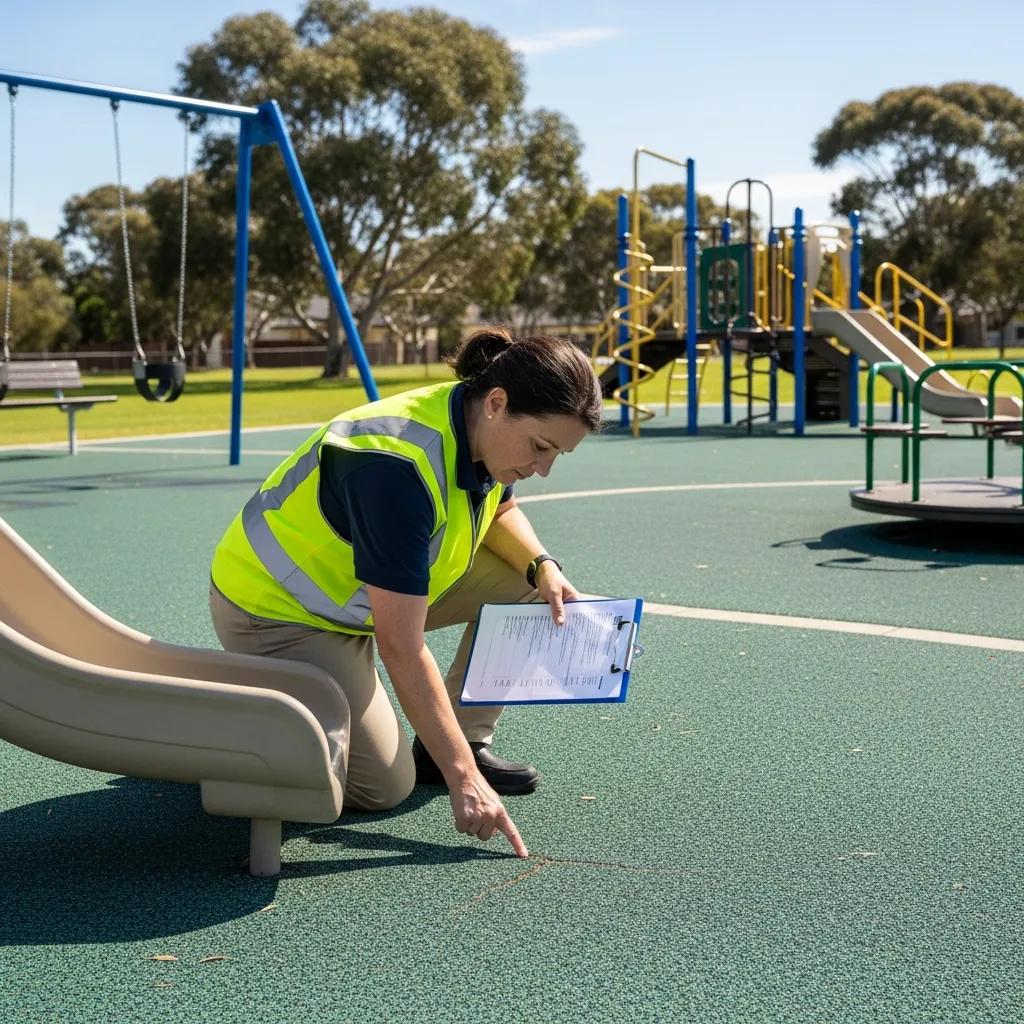
What Should a Playground Safety Inspection Checklist Include?
- Equipment Condition: Check for wear and tear, rust, and structural integrity.
- Surfacing Quality: Assess the condition of surfacing materials for impact absorption.
- Safety Features: Ensure that all safety features, such as guardrails and barriers, are intact and functional.
How Does Routine Maintenance Prevent Playground Hazards?
- Cleaning: Removing debris and hazards from play areas.
- Repairs: Fixing or replacing damaged equipment and surfacing.
- Inspections: Conducting regular inspections to identify and mitigate risks.