Enhancing Dog Parks with Shade

Shade structures for dog parks directly address health, safety, and usability challenges by blocking harmful UV radiation and lowering surface and ambient temperatures to create comfortable microclimates. This article explains how commercial outdoor shade solutions reduce canine heat stress, protect paw pads, and increase owner comfort while extending park hours and community engagement. Readers will learn why shade is essential, the principal benefits for dogs, owners, and municipalities, which types of shade structures work best, planning and placement strategies, and how professional installation and maintenance preserve performance and ROI. The guide maps practical design choices (shade sails, cantilevers, pergolas, and hip roofs), material trade-offs (HDPE vs UV-stabilized meshes, galvanized steel), and compliance considerations including ADA access and anchor protection. Case summaries illustrate measurable community outcomes and procurement-friendly maintenance and warranty guidance, and targeted FAQs help managers make informed decisions about dog park UV protection solutions and municipal dog park shade installation. By the end, facility planners and HOA or municipal buyers will have a clear, actionable framework for selecting and specifying commercial-grade shade structure systems for pet facilities.

Why Is Shade Essential for Dog Parks?

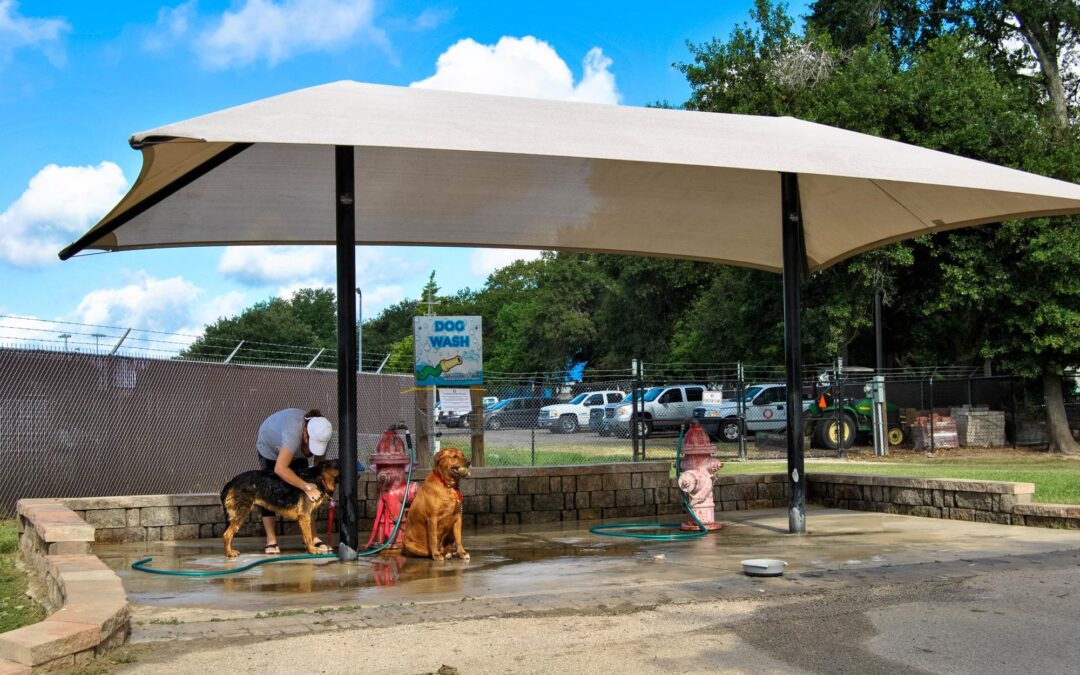
Shade structures are essential for dog parks because they reduce ultraviolet exposure, lower surface temperatures, and directly decrease the risk of heat-related illness in dogs, enabling safer and longer outdoor use. By creating a shaded microclimate, fabric canopies and structural canopies interrupt direct solar radiation and reduce ambient air temperature and ground surface heat, which improves comfort for both animals and owners. Practically, shade increases usable hours during hot seasons, supports hydration and rest areas, and reduces stress on park materials that degrade under prolonged sun. Understanding these core mechanisms prepares planners to evaluate specific shade solutions that balance coverage, durability, and cost.

How Do Shade Structures Protect Dogs from UV Rays and Heatstroke?

Commercial shade structures protect dogs primarily by blocking a large percentage of direct UV radiation and by shading surfaces that otherwise heat up under sun exposure. High-density polyethylene (HDPE) shade fabrics and UV-stabilized meshes typically block between roughly 85% and 98% of harmful UV, creating a cooler microenvironment under the canopy where core-body heat accumulation slows. Shading also reduces surface temperatures on turf, concrete, and play equipment, lowering the risk of paw-pad burns and reducing the physiological stress that can lead to heatstroke. These protective effects make shade a first-line control for heat stress prevention in dog parks and support safer, longer visits.

What Are the Risks of Sun Exposure and Heat for Dogs in Parks?

Unshaded parks increase the risk of canine heat-related illness, sunburn on light-pigmented skin, and paw-pad thermal injury, especially when air temperatures and surface temperatures diverge during peak sun hours. Signs of heat stress include rapid panting, drooling, lethargy, and collapse; these signs escalate rapidly when dogs cannot access cool, shaded rest zones and water. Surface temperatures on asphalt and artificial turf can exceed ambient air temperature by 20°F or more on sunny days, creating hazardous paw contact conditions even when the air feels moderately warm. Recognizing these risks informs placement of shade near entry points, seating, and water stations to interrupt exposure trends and support early intervention.

How Does Shade Improve Comfort and Safety for Dog Owners?

Owners benefit from shade through improved comfort, longer dwell times, and better supervision opportunities that encourage social interaction and stronger community ties around the park amenity. Comfortable seating under canopies enables more consistent supervision, which reduces off-leash conflicts and improves compliance with park rules, while shaded gathering spaces allow programming and events that increase regular use. Shade also creates accessible conditions for older adults and families who might otherwise avoid midday visits, supporting equitable park access. These human-centered benefits feed back into increased park stewardship and perceived property value for neighborhood stakeholders.

What Are the Key Benefits of Commercial Dog Park Shade Structures?

Commercial dog park shade structures deliver cross-cutting benefits: canine health protection through UV reduction, extended park usability that drives visitation and programming, and operational savings from reduced UV-driven equipment degradation. Structurally robust canopies and engineered shade sails change park usage patterns by making rest zones and social areas comfortable across broader hours and seasons, which improves community satisfaction and supports municipal amenity goals. Financially, the right shade solution can lower long-term maintenance costs for furniture and surfacing and offer measurable return on investment via increased programming, permit revenue, or property amenity value. Reviewing stakeholder-specific benefits helps procurement teams prioritize specifications during budgeting and tendering.

Different stakeholders capture distinct benefits from shade structures:

  1. Dogs receive UV protection and surface cooling that reduce heat stress and paw injuries.
  2. Owners gain comfort and extended social time, improving supervision and community interaction.
  3. Municipalities and HOAs realize extended amenity use, lower maintenance cycles, and potential property value uplift.

This stakeholder view clarifies procurement priorities and supports ROI-focused decision-making for public and private park owners.

Design Criteria for Successful Dog Parks: Planning and Features

The aim of this study is to determine how a successful dog park design criteria should be. For this purpose, dog parks were examined under the headings of planning (accessibility, location, car parking and roads, other facilities) and design (entrances and exits, gates, boundaries, surface materials, activity areas, park furniture, planting). As a study method, images, videos, articles, web pages, magazines, books in the internet database were used; then a checklist was created. The checklist was analysed in Hondo, Central and River Bend dog parks in the USA. As a result of

An Investigation Of The Design Criteria Of Dog Parks, GFY Caymaz, 2023

StakeholderPrimary BenefitTypical Outcome
DogsHealth protection (UV, heat)Fewer heat incidents; safer play windows
OwnersComfort and supervisionLonger visits; higher satisfaction
Municipalities/HOAsOperational ROIReduced maintenance; extended amenity use

How Do Shade Structures Extend Dog Park Usability and Visit Duration?

Shade structures extend usable hours by lowering peak surface and ambient temperatures during midday and late-afternoon periods, allowing parks to remain comfortable even when direct sunlight would otherwise limit visits. By providing cool refuges at entry points and activity hubs, shade encourages longer stays, repeat visits, and program scheduling such as training sessions or community events during warmer months. Behavioral changes—like increased playtime and owner socialization—often follow from improved comfort, which in turn supports stewardship and volunteer programming. These dynamics make shade a strategic investment for parks aiming to maximize daily and seasonal use without costly resurfacing or cooling infrastructure.

In What Ways Do Shade Structures Enhance Dog Park Aesthetics and Property Value?

Well-designed shade structures contribute to a park’s visual identity and can elevate surrounding property perceptions by introducing architectural form, color, and layered landscaping that complement civic design. Thoughtful canopy shapes and material palettes—such as neutral HDPE fabrics paired with galvanized steel posts or timber-style finishes—create cohesive civic spaces that attract residents and visitors. Enhanced aesthetics support amenity-based marketing for developments and can be cited in municipal communications as part of quality-of-life improvements. Ultimately, aesthetic upgrades tied to functionality build a stronger case for community investment and can positively influence property desirability around the park.

How Do Shade Structures Protect Park Equipment and Reduce Maintenance Costs?

Shade blocks UV-driven photodegradation of benches, signage, and synthetic surfacing, slowing color fade, brittleness, and material fatigue that lead to frequent repairs or replacements. By sheltering play equipment and seating, canopies reduce the frequency of cleaning cycles and surface resurfacing driven by sun and heat exposure. Lower maintenance frequency translates into lifecycle cost savings and fewer service interruptions, which supports continuous community access. When budgeting, compare projected maintenance intervals with and without shade to quantify operating cost differentials for procurement advocates.

Design Criteria for Successful Dog Parks: Planning and Features

The aim of this study is to determine how a successful dog park design criteria should be. For this purpose, dog parks were examined under the headings of planning (accessibility, location, car parking and roads, other facilities) and design (entrances and exits, gates, boundaries, surface materials, activity areas, park furniture, planting). As a study method, images, videos, articles, web pages, magazines, books in the internet database were used; then a checklist was created. The checklist was analysed in Hondo, Central and River Bend dog parks in the USA. As a result of

An Investigation Of The Design Criteria Of Dog Parks, GFY Caymaz, 2023

Benefit CategoryAttributeValue
Equipment LongevityUV exposure reductionLonger service life; fewer replacements
Maintenance LoadCleaning frequencyReduced cleaning and repair cycles
Operational SavingsLifecycle cost impactLower total cost of ownership over time

For organizations seeking turnkey design and installation, Shade and Play Pros provides project management and engineered shade structure delivery tailored to commercial dog parks, helping translate these benefits into implemented, compliant solutions. Their approach focuses on safe, vibrant outdoor spaces and coordinated installation that aligns with municipal procurement needs while supporting post-install maintenance planning.

What Types of Shade Structures Are Best for Dog Parks?

Choosing the right type of shade structure depends on park size, wind exposure, aesthetic goals, and budget; common options include shade sails, cantilever systems, pergolas, and hip roof structures, each with distinct performance and maintenance profiles. Shade sails are flexible and cost-effective for varied coverage but require precise tensioning and robust anchor design to perform in wind. Cantilever shades offer clean sightlines and larger uninterrupted shade footprints useful for seating areas, while pergolas provide softer visual integration with landscaped parks but offer less continuous UV block unless combined with fabric. Hip roof structures are enclosed canopy systems that offer durable protection and predictable drainage paths, often preferred where full weather resilience and longevity are priorities. Understanding these trade-offs enables planners to match shade structure types to site constraints and program goals.

What Are the Differences Between Shade Sails, Cantilevers, Pergolas, and Hip Roofs?

Shade sails are fabric-based tension systems that provide adaptable coverage and contemporary aesthetics but demand engineered anchors and regular tension inspections for wind performance. Cantilever shade structures use rigid frames that supply stable overhead coverage with minimal in-ground obstructions, making them suitable for larger central canopies and spectator areas. Pergolas are architectural frames that pair well with planted shade and seating but generally require fabric infill for high UV protection. Hip roof structures are enclosed canopy systems that offer durable protection and predictable drainage paths, often preferred where full weather resilience and longevity are priorities. Each option balances coverage, cost, installation complexity, and wind-load performance.

Shade TypeCoverage & CostWind Performance
Shade SailFlexible coverage; moderate costSensitive to wind; requires tensioning
CantileverLarge footprint; higher costGood stability with engineered framing
PergolaArchitectural fit; lower UV unless infilledModerate; depends on infill material
Hip RoofHigh durability; higher costStrong performance; predictable drainage

When comparing materials and custom options, Shade and Play Pros offers custom shade solutions using commercial-grade fabrics and engineered steel components tailored to park size and expected use, helping municipalities and HOAs align design, durability, and maintenance expectations.

How Do Material Choices Affect Durability and UV Protection?

Material choices determine both how much UV is blocked and how long the structure endures under environmental stress; HDPE mesh fabrics provide excellent UV blocking with breathability that reduces heat buildup, while tightly woven UV-stabilized materials deliver higher immediate UV attenuation but may trap more heat. Structural materials like galvanized or powder-coated steel resist corrosion in outdoor environments and provide long scaffold life when paired with proper drainage and anchoring systems. Selecting materials with documented UV-blocking percentages and corrosion-resistance ratings supports procurement specifications that minimize lifecycle risk. Material selection also informs maintenance schedules, with different cleaning and inspection protocols required for fabric vs rigid canopies.

What ADA and Safety Compliance Factors Should Be Considered?

Compliant dog park shade implementation must consider accessible approaches, clear sightlines, sufficient clearance heights, and safe anchor protection for public use, while adhering to local building and wind-load codes. Design teams should ensure that seating areas beneath shade structures have accessible routes and firm, stable surfaces as required by ADA standards, and that anchors or foundations do not create trip or impalement hazards. Safety clearances around tensioned cables, fall zones for play elements, and routine inspection intervals should be specified in procurement documents. Consulting licensed installers and code officials during design reduces approval delays and supports safer long-term operation.

How Should Dog Parks Be Designed and Planned for Optimal Shade?

Effective shade planning starts with a site assessment that maps sun paths, prevailing winds, high-traffic zones, and existing vegetation to prioritize shade placement and structural form factors. A layered approach—combining structural shades with planted canopy trees—maximizes comfort while promoting biodiversity and aesthetic integration. Budgeting should include line items for fabric, foundations, engineered anchors, installation labor, and long-term maintenance to provide realistic total cost estimates and procurement-ready documentation. Thoughtful planning produces a shade strategy that balances coverage effectiveness, lifecycle costs, and user experience.

Where Should Shade Structures Be Placed for Maximum Effectiveness?

Place shade structures at key amenity zones—entrances, seating clusters, water stations, and designated rest areas—to interrupt exposure where users and dogs congregate most and to provide frequent cool refuges across the park. Clustered shade near high-traffic nodes concentrates comfort and supervision benefits, while distributed smaller canopies across linear runs reduce travel to cool spots and support behaviorally diverse use. Orient structures using a simple sun-path diagram to identify peak solar hours and maximize early- and late-day coverage. Prioritizing these zones improves both usability and the perceived accessibility of shaded amenities.

Design Criteria for Successful Dog Parks: Planning and Features

The aim of this study is to determine how a successful dog park design criteria should be. For this purpose, dog parks were examined under the headings of planning (accessibility, location, car parking and roads, other facilities) and design (entrances and exits, gates, boundaries, surface materials, activity areas, park furniture, planting). As a study method, images, videos, articles, web pages, magazines, books in the internet database were used; then a checklist was created. The checklist was analysed in Hondo, Central and River Bend dog parks in the USA. As a result of

An Investigation Of The Design Criteria Of Dog Parks, GFY Caymaz, 2023

Placement OptionEffectivenessCost/Usability
Central canopyHigh single-area coverageModerate to high; ideal for gatherings
Perimeter canopiesDistributed shadingLower per unit cost; broad coverage
Picnic/rest clustersTargeted comfortCost-effective; supports supervision
Linear shade (walkways)Continuous relief along routesHigher install length cost; high usability

How Can Shade Structures Be Integrated Aesthetically into Dog Park Design?

Aesthetic integration pairs canopy color, form, and material finishes with surrounding landscaping and park identity to produce cohesive spaces that feel intentional and maintained. Color choices can reduce glare and heat absorption while complementing local palettes, and combining planted buffers with shade structures softens structural lines and improves microclimate. Layering hardscape seating under canopies with permeable paving and native plantings enhances accessibility and sustainability. These design moves strengthen community acceptance and encourage protective stewardship of new shaded amenities.

What Budget and Project Management Considerations Are Important?

Budget planning should itemize fabric type, foundation work, anchoring hardware, installation labor, permitting, and ongoing maintenance to produce an accurate total cost of ownership estimate for municipal procurement. Phased implementation—starting with high-priority nodes and expanding coverage over time—can align with constrained capital budgets and demonstrate early outcomes to stakeholders. Procurement documents should specify warranty expectations, inspection schedules, and SLAs for timely maintenance. Effective project management coordinates engineers, licensed installers, and local authorities to reduce schedule risk and ensure compliance.

How Are Shade Structures Installed and Maintained in Dog Parks?

Professional installation of commercial shade structures follows an engineered workflow that begins with site survey and design verification, moves through foundations and post setting, and concludes with canopy tensioning and final inspection to ensure performance and safety. Proper installation aligns structural calculations with local code requirements for wind, drainage, and soil conditions, and includes documented inspection sign-off for owner records. Ongoing maintenance—regular fabric checks, tension adjustments, anchor inspection, and seasonal cleaning—preserves performance and reduces lifecycle costs. Understanding both installation steps and maintenance cadence helps managers procure reliable solutions and protect community investments.

What Is the Professional Installation Process for Dog Park Shade Structures?

Professional installation begins with a site survey and engineering review to confirm anchor locations, foundation depths, and wind-load requirements, followed by excavation, foundation pours, and post-setting to manufacturer tolerances. Once structural supports cure, licensed installers affix hardware, apply tensioning procedures for fabric canopies, and test drainage and sightlines before conducting a final safety inspection and handover. Typical project durations vary with scope but generally include staged milestones—survey, foundation, erection, and commissioning—each requiring coordination among engineers, installers, and inspectors. Clear documentation of these steps in contract specifications reduces schedule risk and supports long-term maintenance planning.

  1. Site survey and engineering: Confirm anchors, soil, and wind loads.
  2. Foundations and post-setting: Install concrete or anchored footings per specs.
  3. Canopy tensioning and inspection: Install fabric, tension, and inspect final performance.

These installation steps establish a durable and safe shade system; the next step is establishing a regular maintenance schedule to preserve function.

How Should Shade Structures Be Maintained for Longevity and Performance?

A proactive maintenance schedule extends canopy life and maintains safety: monthly visual inspections for fabric wear and tension, quarterly anchor and hardware checks, and annual professional inspections for foundation integrity and structural corrosion. Cleaning protocols use gentle detergents and rinsing to remove debris and pollutants that accelerate fabric degradation, while tension adjustments after seasonal temperature swings preserve proper load distribution. Recordkeeping of inspections and maintenance actions supports warranty claims and simplifies procurement of follow-up services. Adhering to a documented maintenance plan reduces unexpected replacements and operational interruptions.

What Warranty and Support Options Are Available?

Manufacturers and installers commonly offer separate warranty coverages for fabrics (fade and tear) and structural components (corrosion and weld integrity), with typical durations varying by product class and specification—buyers should request explicit warranty terms and performance thresholds in procurement documents. Service-level agreements that define response times for repairs, scheduled maintenance visits, and parts replacement reduce downtime and protect public safety obligations. Including warranty and SLA requirements in contracts ensures accountability and predictable lifecycle support from suppliers and installers. For municipal projects, specifying documentation and inspection deliverables as part of contract closeout supports compliance and future asset management.

Shade and Play Pros provides licensed installers, maintenance schedules, and warranty support as part of project delivery and post-install service planning, offering turnkey installation and structured maintenance options that align with municipal procurement requirements and long-term asset management goals.

What Are Real-World Examples of Successful Shaded Dog Park Projects?

Real-world shaded dog park projects demonstrate how targeted shade investments increase visitation, enable programming, and reduce maintenance burdens when paired with thoughtful planning and community engagement. Case summaries typically show qualitative increases in regular use, improved owner satisfaction, and fewer surface-related maintenance interventions following shade installation. Municipal clients often report that shaded rest areas enable events and training classes that were previously limited by heat constraints, creating measurable community benefits even when exact numeric tracking is not available. These outcomes illustrate how shade infrastructure supports broader park activation objectives.

How Have Shade Structures Increased Community Engagement and Visitation?

Shaded spaces enable programming such as training sessions, meetups, and small events during warmer months, which increases repeat visitation and promotes a sense of civic stewardship around the dog park amenity. By improving comfort for both dogs and owners, shade encourages longer dwell times and greater social interaction, leading to volunteer-led maintenance and stewardship in some communities. Planners who monitor visit duration, repeat attendance, and event participation can quantify these engagement shifts over time to demonstrate ROI. Such monitoring informs phased expansion decisions and supports budget requests for additional shaded coverage.

What Do Clients Say About Their Experience with Shade and Play Pros?

Clients working with Shade and Play Pros emphasize the company’s turnkey project management, coordinated installation, and focus on safety-tested, ADA-compliant solutions as central to achieving durable, community-valued outcomes. Project teams appreciate coordinated scheduling with licensed installers and clear maintenance handover materials that simplify ongoing asset care. While individual project metrics vary, client feedback often highlights improved usability and positive community response following shade installation. For managers preparing procurement documents, these implementation attributes clarify what to request from potential suppliers.

How Do These Projects Demonstrate Safety and Compliance Benefits?

Shaded park projects typically document compliance by including engineered drawings, anchor details, and inspection reports that demonstrate adherence to local codes, ADA access requirements, and manufacturer installation recommendations. Inspection and documentation practices—such as commissioning reports and scheduled maintenance records—provide evidence that reduces liability and supports municipal acceptance. By specifying these deliverables in contracts, project owners ensure that safety and compliance are built into both installation and lifecycle management. These practices protect users and extend the effective service life of installed shade systems.

For organizations seeking end-to-end delivery, Shade and Play Pros offers turnkey project management that coordinates design, engineered installation, and handover documentation, enabling municipalities and HOAs to secure compliant, maintained shade investments with predictable operational outcomes.

Essential Shade Structure FAQs for Dog Park Managers

Dog park managers commonly ask how shade reduces health risks, which structure types fit different park sizes, what maintenance will be required, and how shade investments affect community satisfaction and property value. Clear, direct answers to these questions help operational teams specify procurement requirements, plan budgets, and schedule maintenance that protects both users and assets. Below are concise, actionable responses to the most frequent queries to support decision-making and featured-snippet-style guidance for managers evaluating dog park shade solutions.

Why Do Dog Parks Need Shade?

Dog parks need shade to protect animals from UV exposure, reduce the risk of heatstroke, and lower surface temperatures that can injure paw pads; providing shade improves both safety and comfort for dogs and owners. Shaded areas create cool refuges that extend usable hours and support supervision and programming. Shade also reduces material degradation and maintenance frequency for benches and surfacing. Prioritizing shade in planning ensures equitable access and supports higher community satisfaction.

How Do Shade Structures Prevent Dog Heatstroke and Sunburn?

Shade structures prevent heatstroke and sunburn by substantially reducing direct UV exposure and lowering surface temperatures where dogs play and rest, thereby reducing thermal load on animals and their paw pads. Fabrics with high UV-block ratings combined with breathable meshes keep air circulating while cutting radiation load, which moderates core temperature increases during activity. Managers should also pair shade with hydration stations and monitoring protocols for early signs of distress. This combination of shading and operational measures is the most effective prevention strategy.

Which Shade Structure Types Are Most Effective for Different Dog Park Sizes?

For small parks, compact canopies or pergolas provide targeted relief at entry points and seating clusters; for medium parks, multiple shade sails or cantilevers create flexible coverage; for large parks, multi-panel shade systems or engineered cantilever fields deliver broad, continuous shade corridors. Matching type to scale balances cost, sightlines, and maintenance complexity while ensuring sufficient coverage for primary amenity zones. Managers should prioritize shade near high-use nodes and distribute coverage to reduce travel to cool spots. Selecting commercially rated materials and engineered foundations supports durability at every scale.

How Can Shade Structures Improve Community Satisfaction and Property Value?

Shade structures improve satisfaction by making parks more comfortable and usable, which attracts more frequent use and positive word-of-mouth that can enhance local property perception. Amenities that support extended programming and create inviting public spaces contribute to perceived neighborhood quality and can factor into property desirability analyses. Managers can track indicators such as event participation, repeat visitation, and resident feedback to quantify satisfaction improvements post-installation. Demonstrating these outcomes supports future investments in public amenities.

  1. Prioritize safety and accessibility: Ensure ADA access and clear sightlines for all covered areas.
  2. Specify durable materials: Choose fabrics and structural finishes that minimize maintenance.
  3. Document maintenance and warranties: Require inspection schedules and warranty terms in procurement.

These practical steps help managers translate shaded amenity benefits into sustained community value and operational predictability.

This article has integrated targeted guidance on shade structures for dog parks, including material choices, placement strategies, maintenance schedules, and procurement-focused advice to help municipal, HOA, and commercial property decision-makers specify effective, compliant solutions. For turnkey design and installation services that align with these guidelines, Shade and Play Pros provides commercial-grade shade structure expertise, licensed installers, and maintenance planning to support long-term community outcomes.